18 Small Space Living Room Ideas That Make Any Room Feel Big
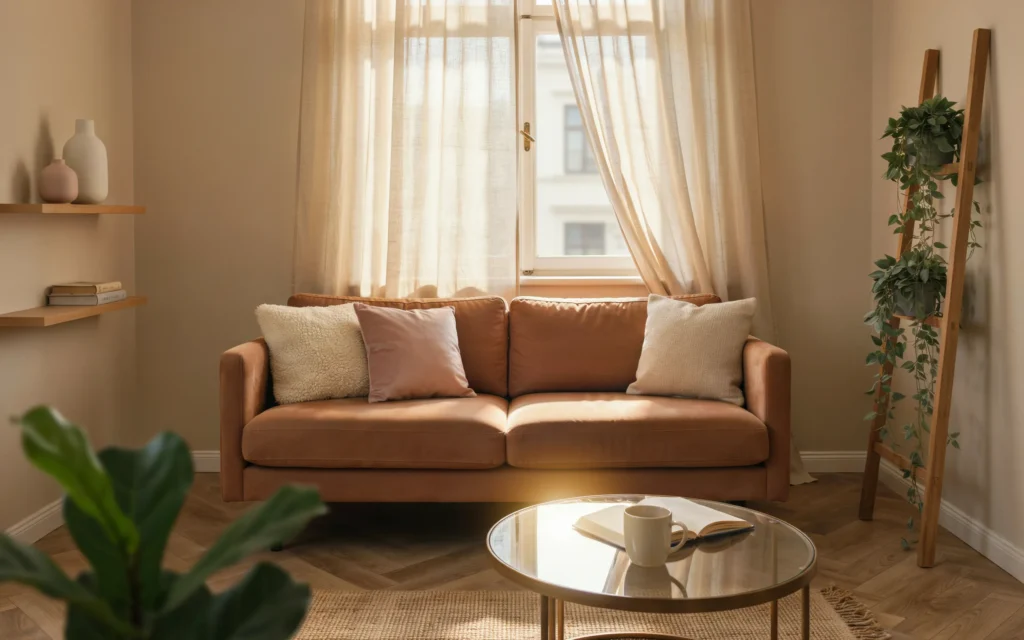
Picture walking into a living room that feels open, bright, and effortlessly styled, even though it’s smaller than you’d like. That’s exactly what the right small space living room ideas can do, and it doesn’t require knocking down walls or buying a bigger apartment. In my experience, the rooms that feel biggest aren’t always the largest ones, they’re the ones styled with intention. This list walks through 18 practical ideas, from mirror placement to furniture choices, so you can transform your own space without a major renovation. Whether you’re working with a studio apartment or a compact living room, there’s an idea here that will help your space feel open, functional, and genuinely yours.
1. Light Reflective Mirror Wall
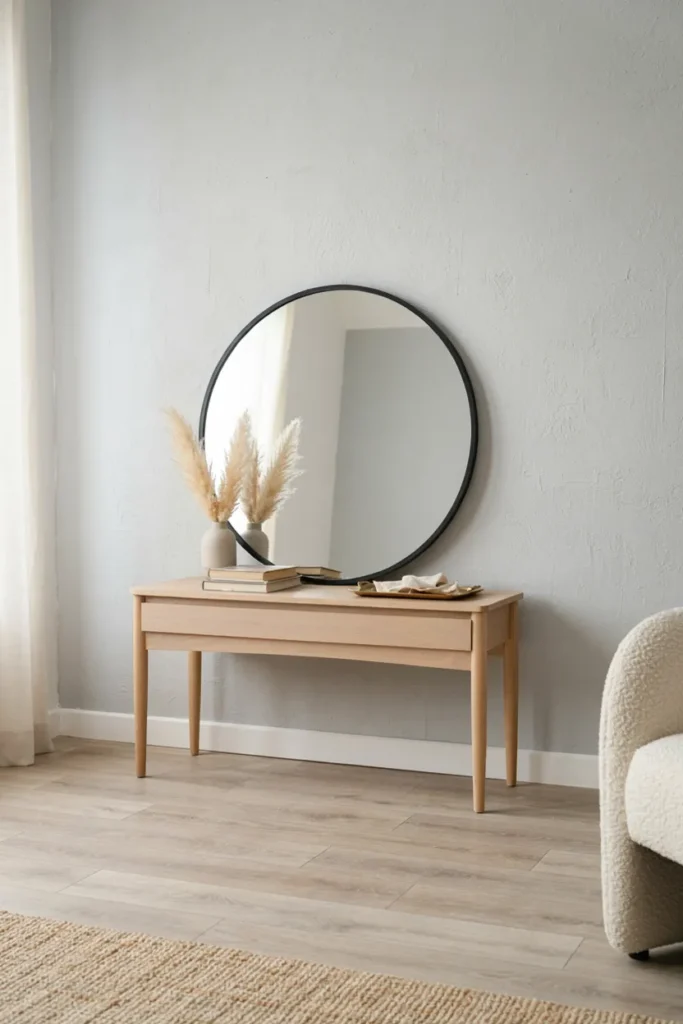
- Bounces natural light around the room, making it feel more open
- Large mirrors create the illusion of depth on a flat wall
- Works well leaned against furniture or mounted above a console
- Affordable way to add visual interest without extra furniture
A large mirror leaning against the wall is one of the simplest small space living room ideas for instantly making a room feel bigger than it actually is. Positioning it to reflect a window or light source bounces natural light across the space, brightening even the darkest corners. I’ve tried this in a narrow apartment living room, and the mirror alone made the whole room feel noticeably more open without moving a single piece of furniture around. Leaning it against the wall rather than mounting it also keeps the setup flexible if the layout changes later.
This idea works especially well because it adds visual interest without taking up any actual floor space. I’ve noticed that round or arched mirrors tend to soften a room’s lines more than sharp rectangular ones, creating a gentler feel that suits tiny living room ideas particularly well. Choosing a mirror large enough to reflect a meaningful portion of the room, rather than a small decorative piece, makes the biggest difference in how spacious the space ultimately feels once it’s in place.
2. Multi-Functional Coffee Table
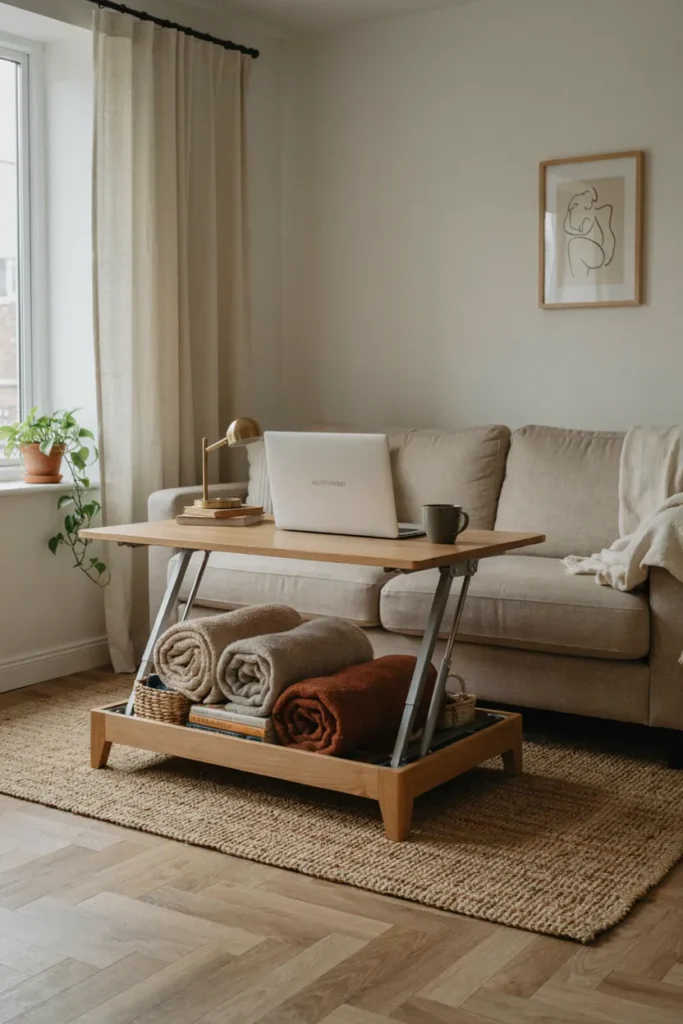
- Combines a coffee table, workspace, and storage into one piece
- Lift-top design adds function without needing extra furniture
- Hidden storage keeps blankets and remotes out of sight
- Great swap for anyone working from a small living space
A multi-functional coffee table solves several problems at once, providing a surface for drinks, a workspace when needed, and hidden storage underneath for everyday clutter. This makes it one of the most practical small space living room ideas for anyone furnishing a compact area where every piece needs to serve more than one purpose. I’ve tried swapping a plain coffee table for a lift-top version, and the difference was immediate, laptops and paperwork had a proper surface instead of being balanced awkwardly on a lap or the sofa cushion nearby.
That’s why many designers recommend multi-purpose furniture as a foundation for good compact living room ideas, especially in apartments where square footage is limited. I’ve noticed that choosing a table with enclosed storage, rather than open shelving, keeps the room looking tidier since blankets and remotes stay hidden from view. This piece works particularly well for anyone wanting small living room decor that feels both functional and visually calm, without needing a separate desk or storage cabinet taking up additional space.
3. Vertical Curtain Hanging
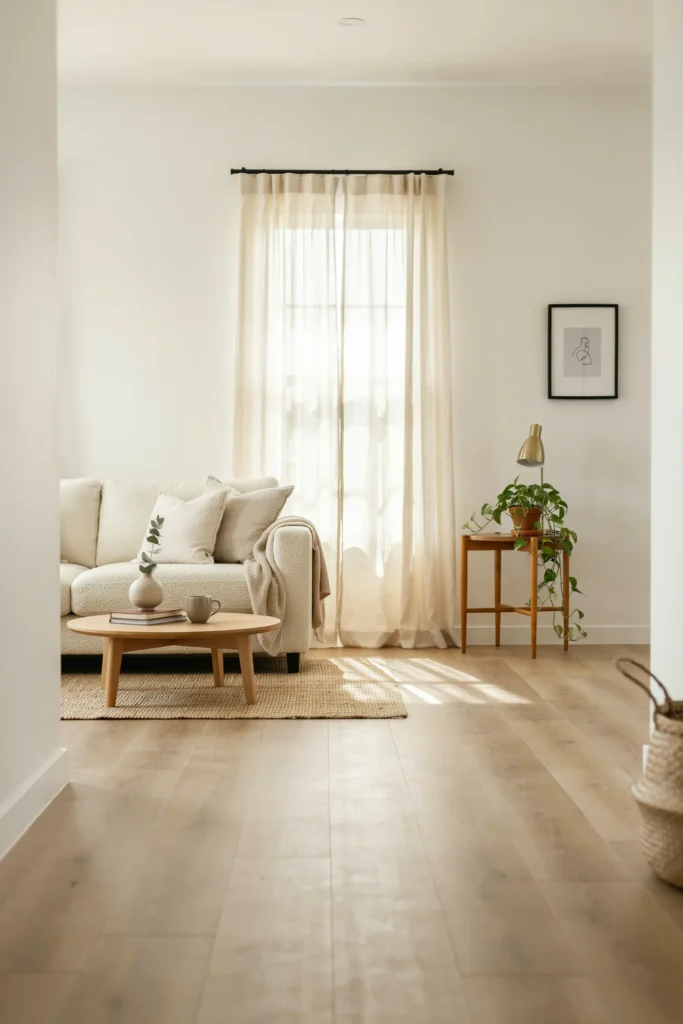
- Draws the eye upward, making ceilings feel taller than they are
- Floor-length curtains add softness without visually cutting the room
- Hanging rods higher than the window frame maximizes perceived height
- Works with almost any curtain color or fabric texture
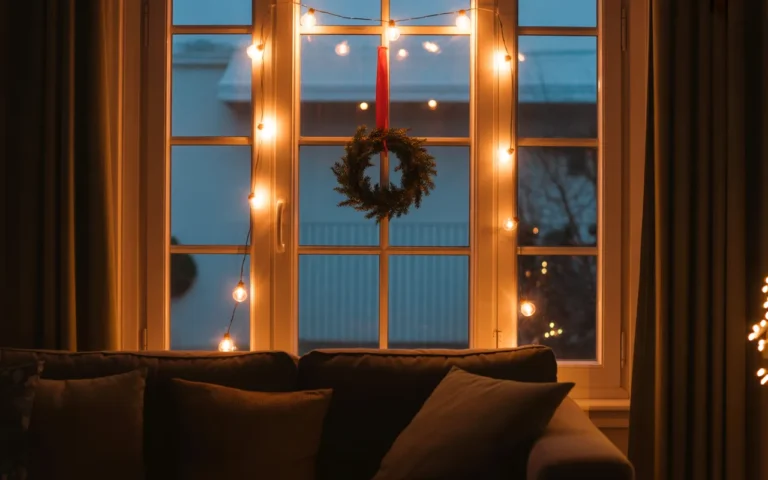
Hanging curtains higher than the actual window frame is a simple trick that tricks the eye into perceiving a taller ceiling than what’s really there. Letting the fabric fall all the way to the floor, rather than stopping at the windowsill, creates one long, unbroken vertical line that makes the whole room feel more expansive. I’ve tried this in a small apartment with low ceilings, and the difference was surprisingly noticeable, the room felt taller and airier almost immediately once the curtains were rehung at the new height.
This is one of the easiest tiny living room ideas to execute since it requires no new furniture, just repositioning the curtain rod a few inches higher than before. I’ve seen this work well in rooms with limited natural light, particularly when paired with sheer or lightweight fabric that still allows sunlight to filter through during the day. This small adjustment pairs beautifully with the mirror idea already covered, doubling down on techniques that visually stretch a compact living room ideas approach without adding any bulk to the actual floor plan.
4. Nesting Side Tables
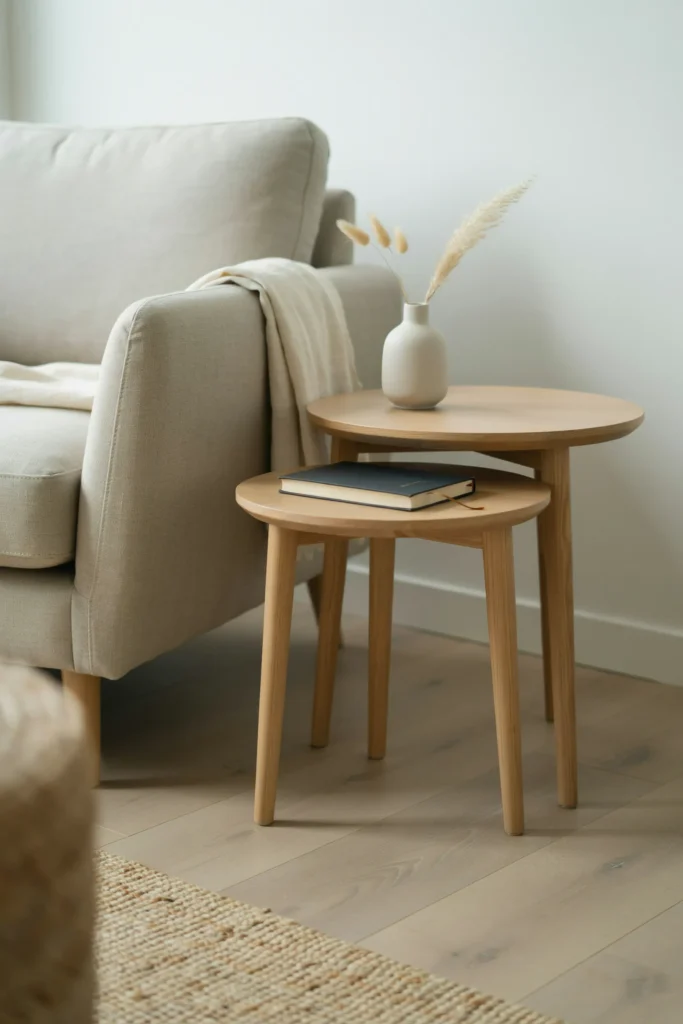
- Provides extra surface space that tucks away when not needed
- Nesting design takes up minimal floor space compared to separate tables
- Easy to pull out for guests, then tuck back in afterward
- Works well in corners, beside chairs, or near a sofa
Nesting side tables solve the common problem of needing extra surface space without permanently committing floor area to a large table. Sliding the smaller table under the larger one when not in use keeps the footprint minimal, then pulling it out easily when guests arrive or extra surface space is needed. I’ve tried this pairing beside a reading chair, and it consistently proved more practical than a single bulky side table, since the flexibility matched how the space actually got used day to day.
This is one of the more clever small space living room ideas because it offers the function of two tables while only requiring the footprint of one most of the time. I’ve noticed that round nesting tables tend to feel less bulky than square or rectangular versions, softening the room’s overall visual weight. This idea pairs naturally with the multi-functional coffee table already covered, building a living room full of furniture that flexes to meet different needs throughout the day.
5. Wall-Mounted Media Console
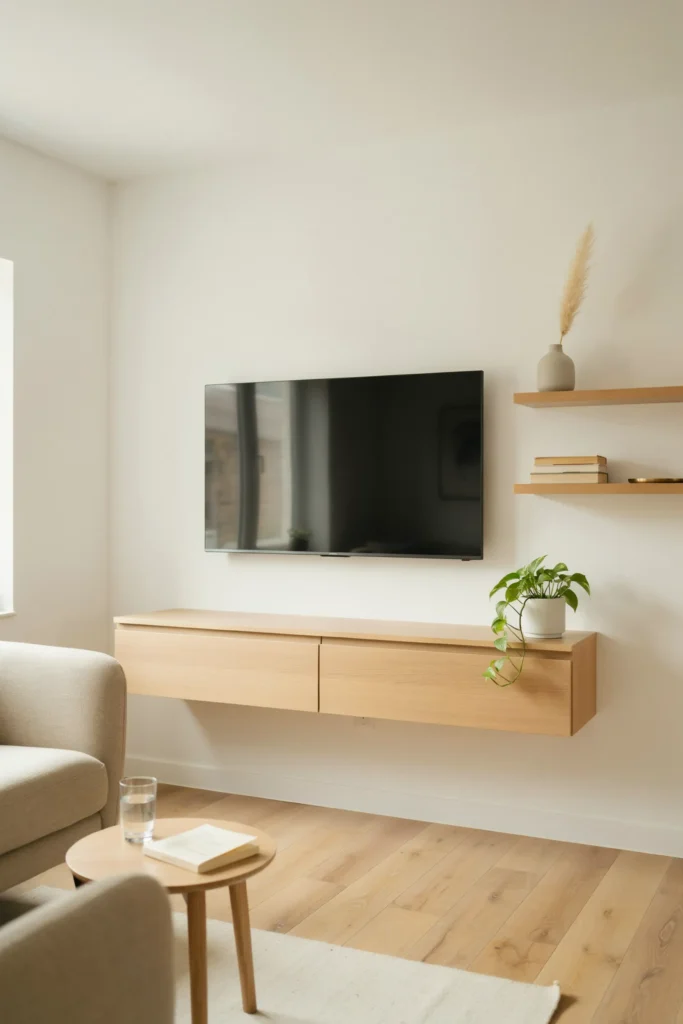
- Frees up floor space by mounting storage directly on the wall
- Floating design makes the room feel lighter and more open
- Keeps cords and media equipment neatly out of sight
- Works well paired with a wall-mounted television above it
Mounting a media console directly on the wall, rather than placing a bulky cabinet on the floor, opens up valuable square footage in a compact living room. The floating design allows light and sightlines to pass underneath, making the entire room feel airier compared to a solid, floor-standing unit blocking that same space. I’ve tried this swap in a studio apartment living area, and the visual difference was immediate, the floor felt more open and the room read as noticeably larger once the console was lifted off the ground.
This is one of the most effective compact living room ideas for anyone dealing with a genuinely tight footprint, since it removes an entire piece of floor-based furniture from the equation. I’ve noticed that choosing a console with closed cabinet doors, rather than open shelving, keeps cords and media clutter hidden from view. This idea pairs beautifully with the vertical curtain trick already covered, combining two techniques that both work to make the ceiling and floor feel more spacious than they technically are.
6. Slim Profile Sofa
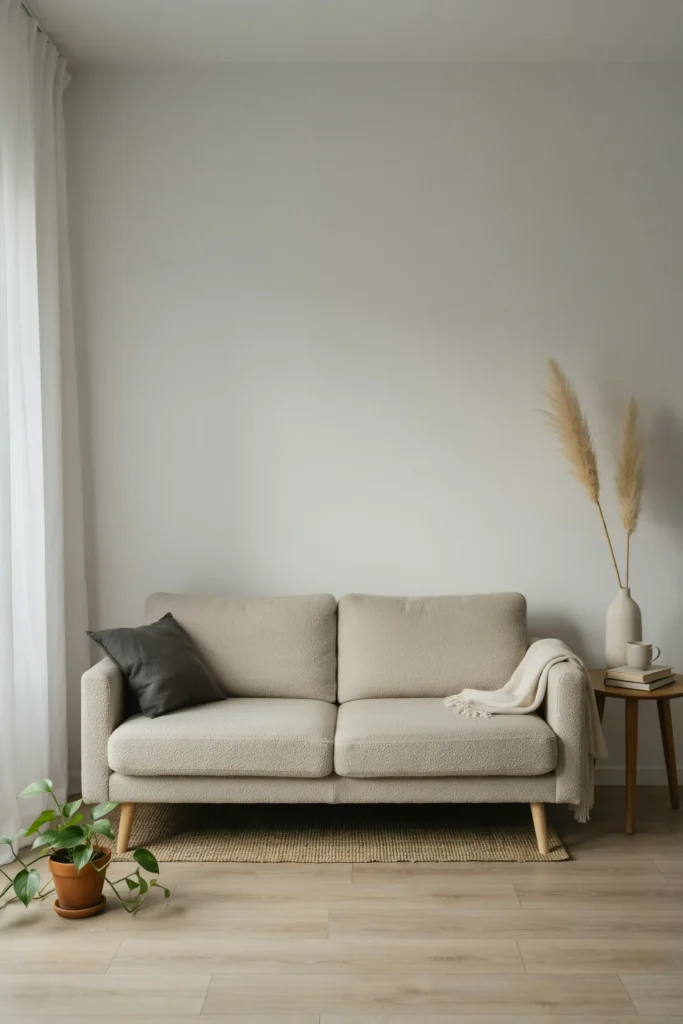
- Takes up less visual and physical space than a bulky traditional sofa
- Lower arms and back create a more open sightline across the room
- Works well in studio apartments or narrow living spaces
- Pairs easily with slimmer accent chairs for balanced proportions
Choosing a slim-profile sofa over a deep, oversized sectional is one of the most impactful small living room decor decisions for anyone working with limited square footage. Lower arms and a slimmer back keep sightlines open across the room, meaning the space doesn’t feel visually blocked the moment someone walks in. I’ve tried this swap in a studio apartment, and the room immediately felt more proportional, the sofa filled its role without dominating the entire living area the way a bulkier piece previously did.
This idea works particularly well because sofa size often has the biggest single impact on how spacious a small room feels overall. I’ve noticed that pairing a slim sofa with equally slim accent chairs, rather than mixing bulky and slim pieces together, creates a more cohesive, balanced look throughout the room. This is one of the foundational small space living room ideas worth prioritizing early, since furniture choices made here influence how every other piece in the room needs to be scaled afterward.
7. Floating Wall Shelves
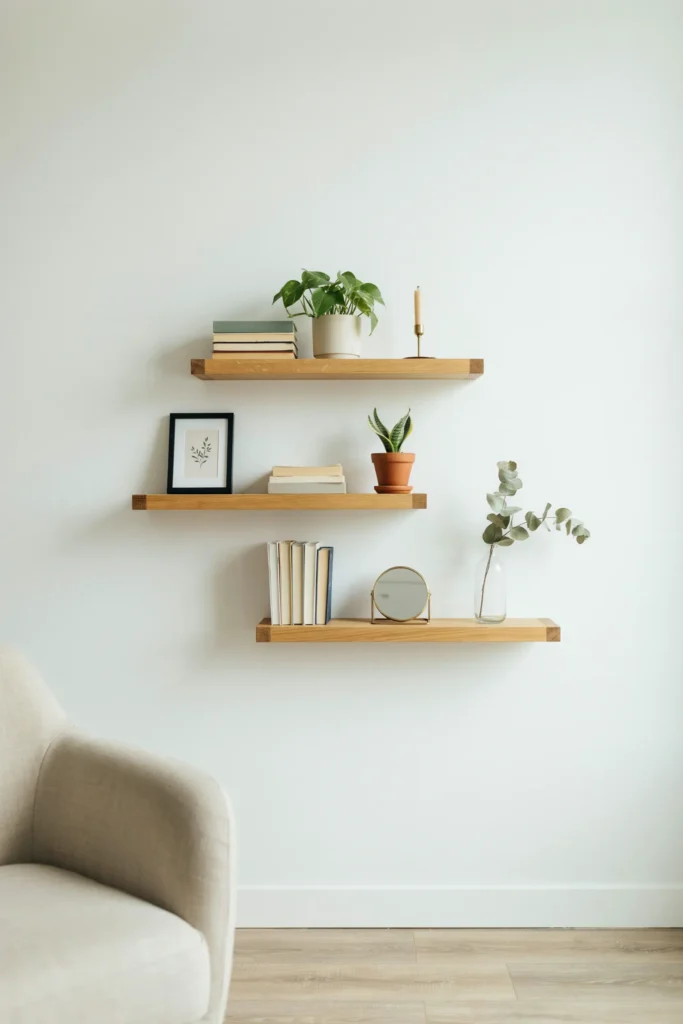
- Adds storage and display space without touching the floor
- Keeps decor visible and easy to rearrange or refresh seasonally
- Works well above sofas, media consoles, or reading nooks
- Affordable to install with basic brackets and reclaimed wood
Floating shelves bring both storage and personality to a wall without requiring any floor space at all, making them one of the most efficient tiny living room ideas available. Mounting a few shelves above a sofa or media console gives books, plants, and small decor pieces a proper home, rather than letting them accumulate on already limited surfaces elsewhere in the room. I’ve tried this above a low media console, and it consistently added personality to the room without making the space feel more crowded or cluttered.
What makes floating shelves especially useful is how easily they can be restyled throughout the year without much effort or cost. I’ve noticed that leaving some negative space between items, rather than filling every shelf completely, actually makes a small room feel calmer and less visually busy. This idea pairs naturally with the wall-mounted media console already covered, building a full wall of storage and display that never touches the floor or interrupts the room’s open feel.
8. Light and Airy Color Palette
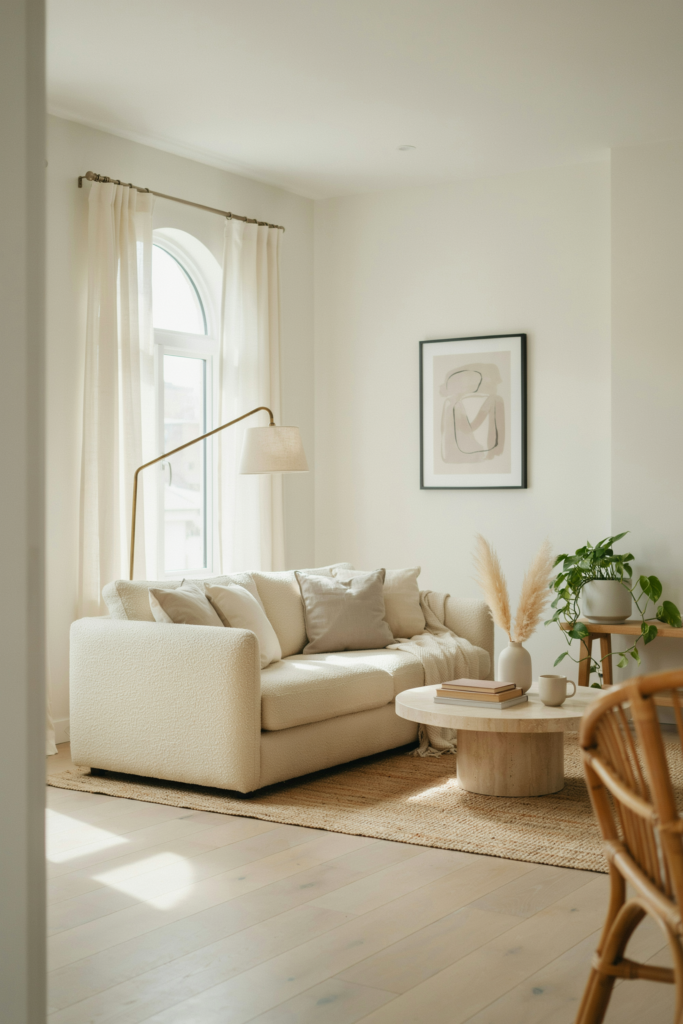
- Light colors reflect more natural light, making the room feel bigger
- Neutral palettes create a calm, cohesive backdrop for furniture
- Works well as a base for layering in texture and personality
- Easy to update seasonally without repainting or major changes
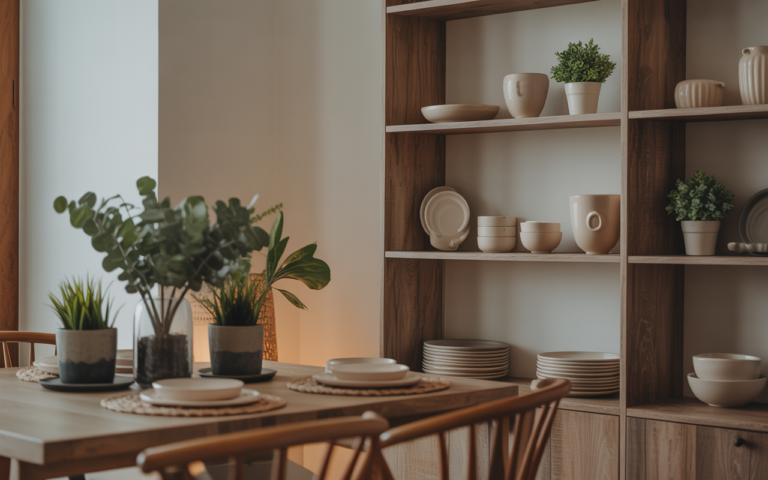
Sticking to a light, neutral color palette throughout a small living room is one of the most foundational small space living room ideas for making the whole area feel brighter and more expansive. Soft whites, creams, and light woods reflect available natural light rather than absorbing it, which matters significantly in rooms that don’t receive much sunlight throughout the day. I’ve tried this approach in a north-facing apartment, and the lighter palette made a real difference, the room felt noticeably brighter even on overcast days compared to how it looked with darker furniture previously in place.
This idea works especially well as a base layer that every other design choice builds on top of. I’ve noticed that keeping walls and large furniture pieces light, while adding color through smaller accents like pillows or artwork, achieves the best of both worlds, brightness and personality together. This is one of the most versatile pieces of small living room decor advice since it applies regardless of the room’s actual layout or furniture choices made afterward.
9. Corner Reading Nook
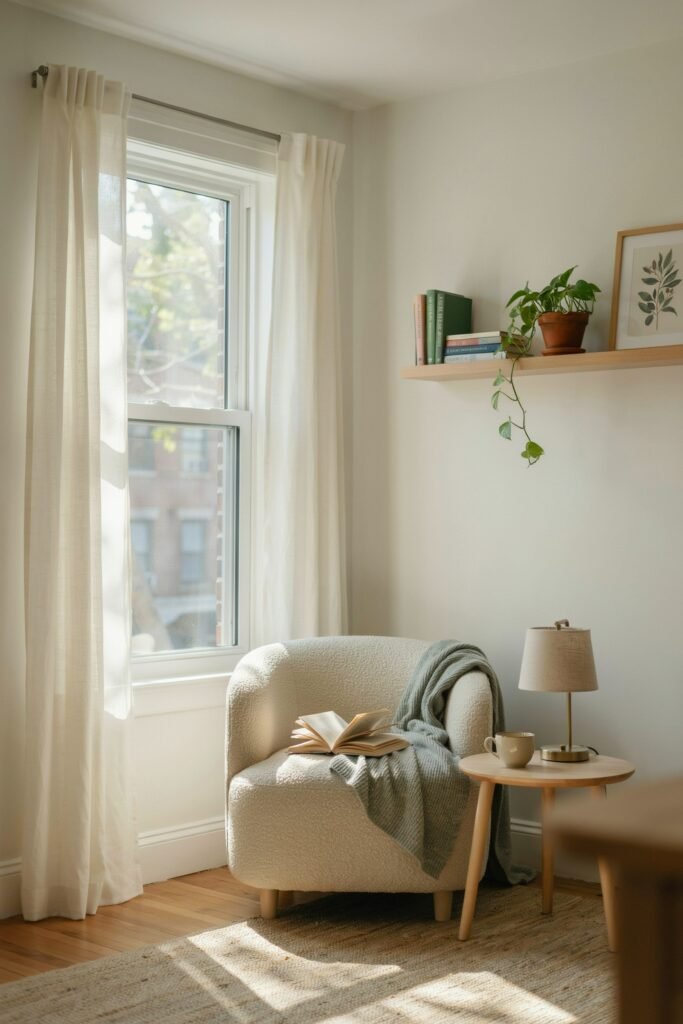
- Uses an often-overlooked corner for a functional, cozy purpose
- Compact furniture keeps the nook from feeling cramped or bulky
- Adds a personal retreat space without needing a separate room
- Works well tucked beside a window for natural reading light
Tucking a small armchair and lamp into an unused corner transforms wasted space into one of the most functional tiny living room ideas available. Corners often go completely undecorated in small apartments, yet they’re frequently large enough to fit a single chair and side table comfortably. I’ve tried this in a living room corner that previously sat empty, and it became one of the most-used spots in the entire apartment once furnished, proving that even small, awkward spaces can serve a real purpose with the right compact pieces.
This idea works particularly well because it adds function to the room without competing with the main seating area for attention. I’ve noticed that positioning the nook near a window, rather than in a darker corner, makes the space feel more inviting for actual daily use. This approach pairs beautifully with the slim sofa already covered, since a compact reading chair doesn’t compete for visual weight against the room’s main seating arrangement.
10. Under-Window Bench Seating
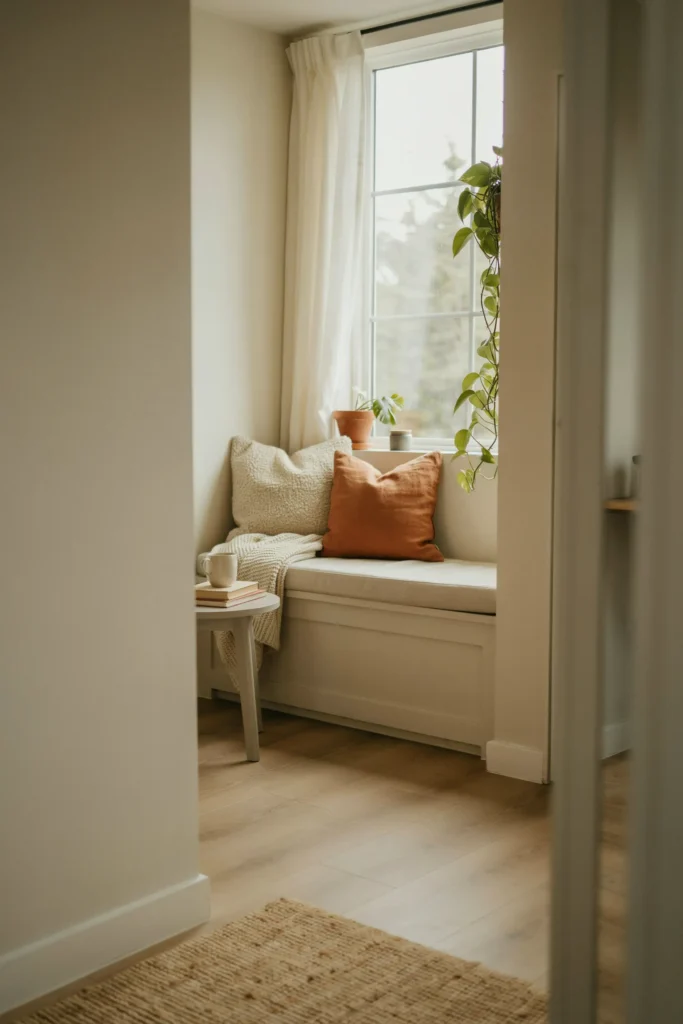
- Uses window space that often sits empty or underutilized
- Bench seating provides extra seating without a bulky armchair
- Cushions add softness while keeping the footprint slim
- Works beautifully paired with a small table for casual dining or work
Placing a slim bench beneath a window turns an often-overlooked area into functional seating without the bulk of a traditional armchair or loveseat. This approach works particularly well in small space living room ideas where every additional seat matters but floor space remains limited. I’ve tried this setup beneath a large living room window, and the bench provided comfortable extra seating for guests while taking up significantly less visual and physical space than adding another chair elsewhere in the room.
This idea is especially practical since window benches can double as casual workspaces or dining spots when paired with a small nearby table. I’ve noticed that adding a few cushions and a throw pillow or two softens the bench’s structure, making it feel more like intentional seating than an afterthought. This piece works beautifully alongside the reading nook already covered, giving a small living room multiple casual seating options without ever feeling overcrowded or cluttered.
Need more organization tips beyond the living room? Check out 20 Small Space Storage Ideas for Smart Home Organization for more ideas.
11. Glass and Acrylic Furniture
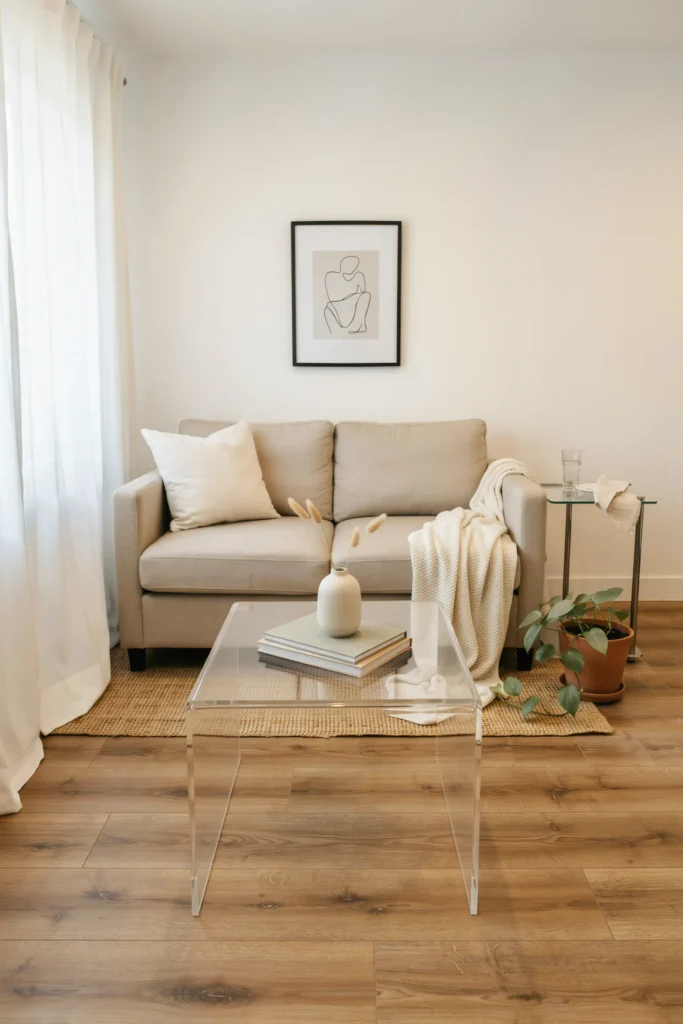
- Transparent materials visually disappear, making the room feel more open
- Works well as a lighter alternative to solid wood furniture
- Reflects light rather than blocking it, brightening the space
- Pairs easily with almost any existing color scheme or style
Choosing clear acrylic or glass furniture over solid wood pieces is one of the more clever compact living room ideas for anyone wanting extra function without adding visual bulk. A glass coffee table or acrylic side table essentially disappears from view, allowing the eye to travel past it rather than stopping at a solid, opaque surface. I’ve tried swapping a wooden coffee table for a clear acrylic version, and the room genuinely felt more open afterward, even though the furniture’s actual footprint remained exactly the same size as before.
This idea works particularly well in rooms already feeling visually crowded, since transparent materials add function without contributing to that sense of clutter. I’ve noticed that pairing one clear piece with solid furniture elsewhere in the room, rather than making everything transparent, creates the best balance between openness and warmth. This approach pairs naturally with the light color palette already covered, reinforcing a bright, airy feeling throughout the entire small living room decor scheme.
12. Vertical Bookshelf Column
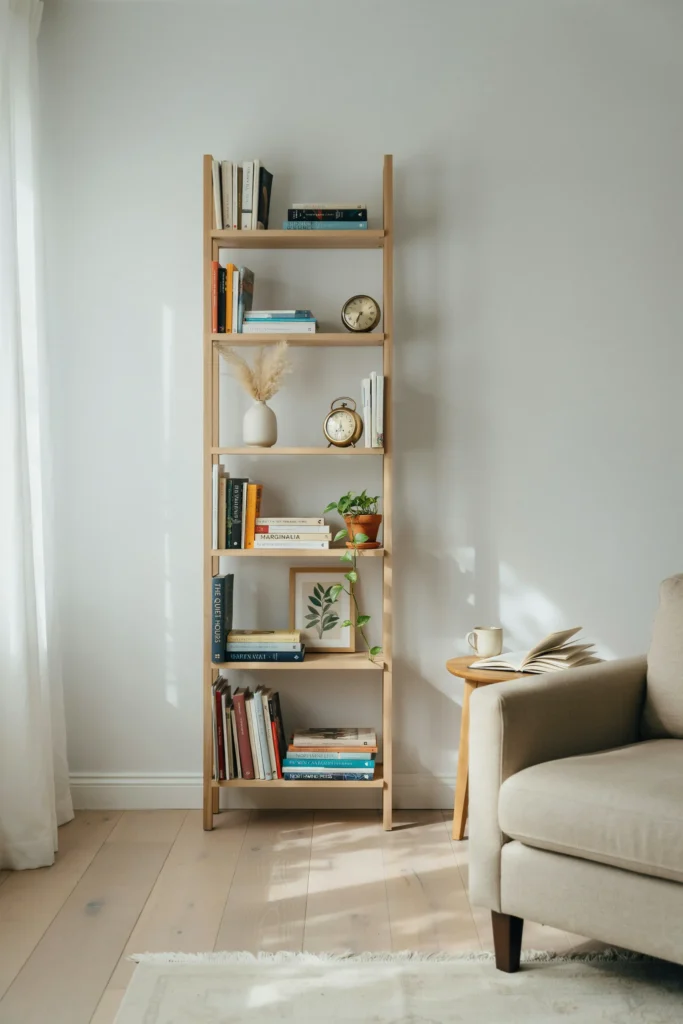
- Uses vertical space instead of a wide, floor-hogging bookshelf
- Narrow footprint fits easily into tight corners or gaps
- Draws the eye upward, emphasizing ceiling height
- Provides ample storage without sacrificing much floor space
A tall, narrow bookshelf makes far better use of a small living room’s limited square footage than a wide, low bookshelf ever could. Building storage upward instead of outward means the same amount of books and decor can be housed in a fraction of the floor space, which matters significantly in tiny living room ideas where every square foot counts. I’ve tried this vertical approach in a narrow gap beside a window, and it fit perfectly into a spot that a standard-width bookshelf never could have occupied.
This idea also reinforces the same height-emphasizing effect created by the curtain trick covered earlier, drawing the eye upward and making ceilings feel taller in the process. I’ve noticed that keeping the top shelves slightly less full than the lower ones creates better visual balance, since a heavily loaded top shelf can feel top-heavy in a narrow column. This piece works beautifully in awkward gaps or corners that wider furniture simply wouldn’t fit into.
13. Foldable Dining Nook
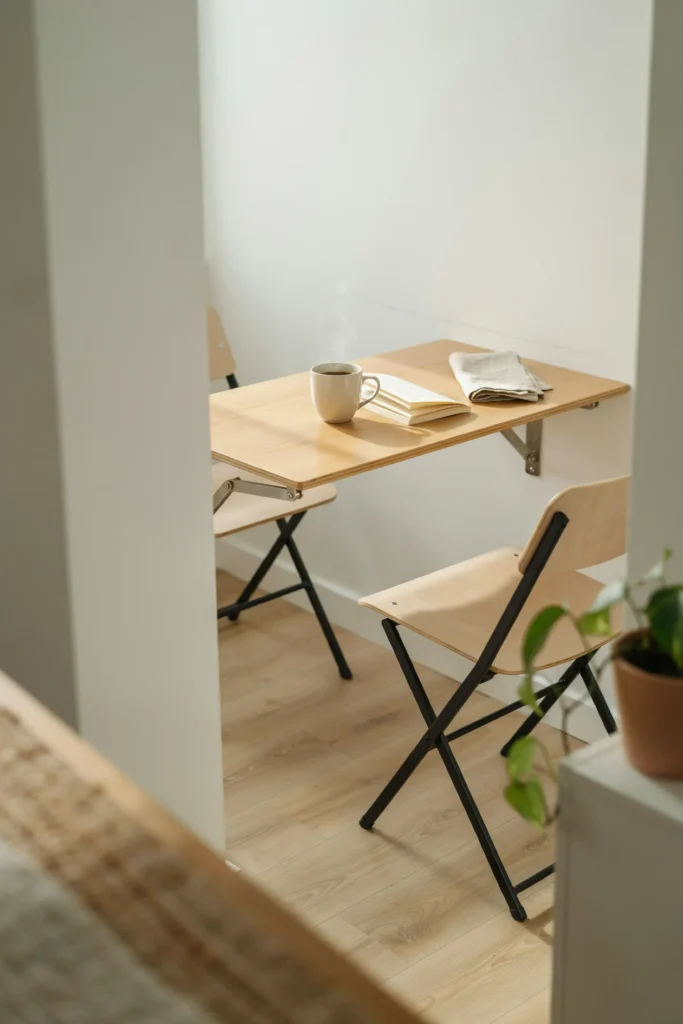
- Provides a dining or workspace that disappears when not needed
- Wall-mounted design keeps the footprint minimal when folded away
- Works well for studio apartments without a separate dining area
- Pairs easily with slim folding chairs for extra flexibility
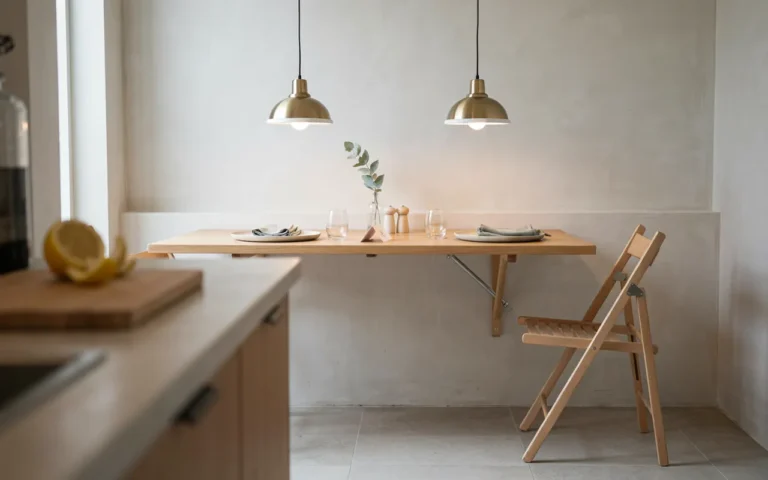
A fold-down table mounted to the wall gives a small living room genuine dining or workspace function without permanently occupying valuable floor space. Folded flat against the wall when not in use, it essentially disappears, then extends out fully whenever a meal or workspace is actually needed. I’ve tried this setup in a studio apartment without a separate dining area, and it consistently solved the problem of needing a table without committing floor space to something used for only part of the day.
This is one of the most practical small space living room ideas for anyone living in a true studio layout where the living room serves multiple functions throughout the day. I’ve noticed that pairing the table with slim folding chairs, rather than bulkier dining chairs, keeps the whole setup easy to tuck away completely when guests aren’t over. This idea works particularly well alongside the under-window bench already covered, giving the room flexible seating and surface options that adapt to different needs.
14. Statement Rug Anchor
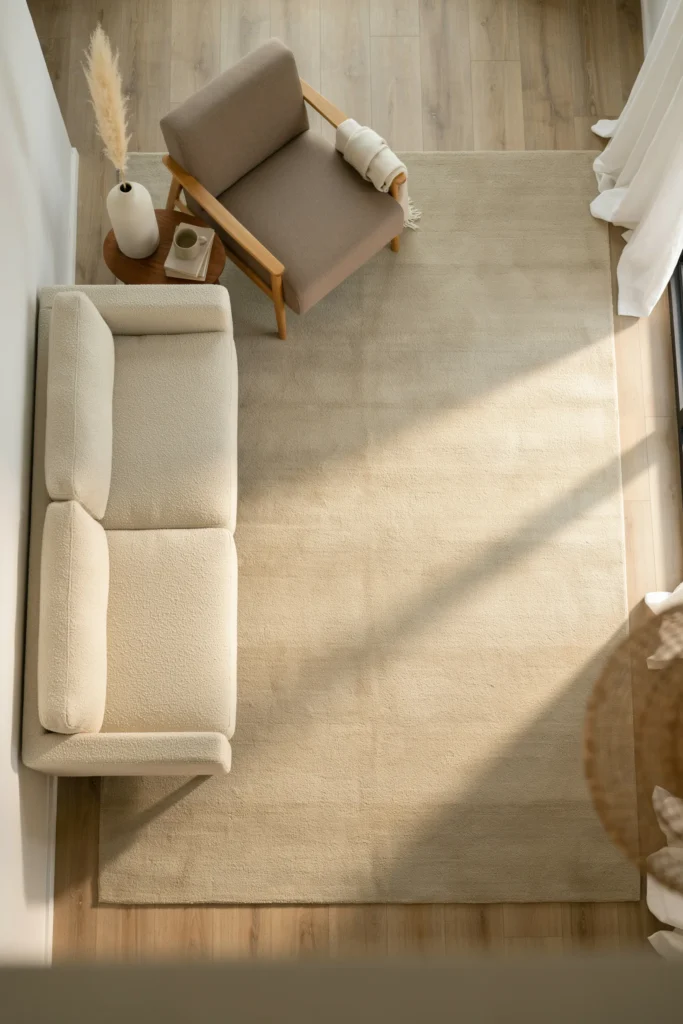
- Defines the seating area without needing walls or furniture dividers
- Larger rugs make a room feel more expansive than smaller ones
- Ties furniture pieces together into one cohesive visual grouping
- Works well in open-concept layouts needing subtle zone definition
Choosing a rug large enough to sit beneath all the furniture legs, rather than a small rug floating in the middle of the room, is one of the most underrated small living room decor tricks available. A properly sized rug anchors the seating area and visually expands the room, while an undersized rug can actually make the same space feel smaller and more disjointed. I’ve tried sizing up a rug in a compact living room, and the entire seating arrangement suddenly felt more intentional and cohesive once the furniture had a proper visual foundation beneath it.
This idea works particularly well in open-concept layouts where a rug helps define the living room zone without needing walls or furniture dividers to separate it from adjoining spaces. I’ve noticed that lighter rug tones tend to expand a room’s perceived size more than dark, heavily patterned options. This approach pairs beautifully with the light color palette already covered, reinforcing an overall bright, spacious feeling throughout the entire room.
15. Hidden Storage Ottoman
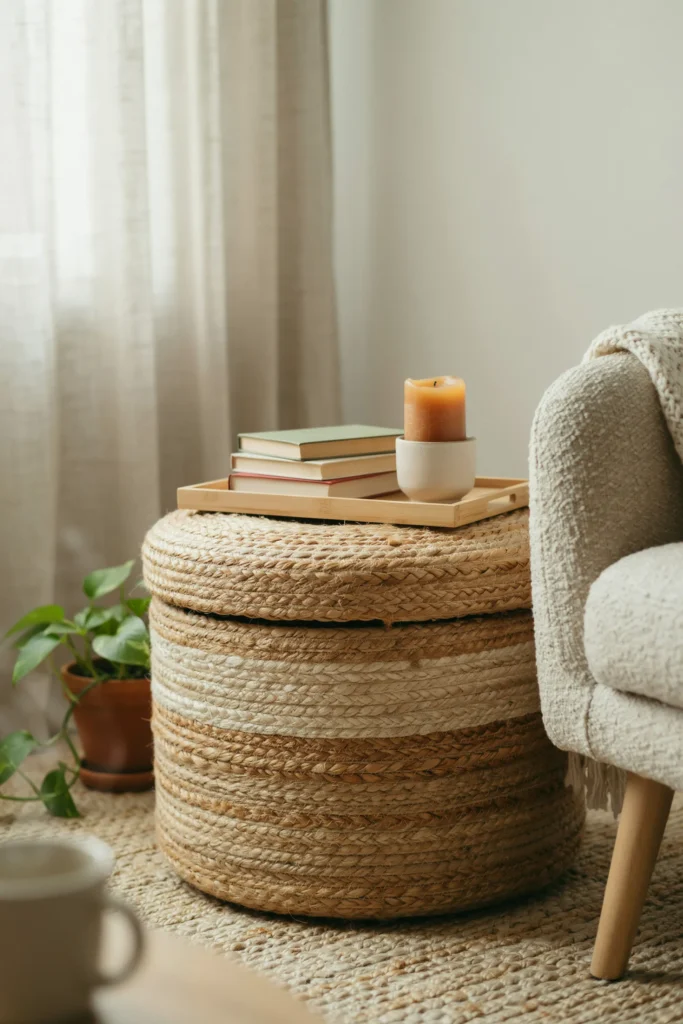
- Doubles as seating, a coffee table, and hidden storage all in one
- Perfect for blankets, remotes, or magazines out of sight
- Soft materials keep the room feeling warm rather than cluttered
- Great space-saving swap for traditional coffee tables and side tables
A storage ottoman solves three problems at once, extra seating, a surface for drinks or books, and hidden storage, all within a single piece of furniture. This makes it one of the most practical small space living room ideas for anyone furnishing a compact area where every piece needs to earn its place. I’ve tried swapping a traditional coffee table for a storage ottoman, and the difference in usable space was immediate, blankets and remotes disappeared inside instead of piling up on the table’s surface throughout the week.
That’s why many designers recommend multi-purpose furniture as a foundation for good tiny living room ideas, especially in apartments where square footage is limited. I’ve noticed that woven or upholstered ottomans blend more naturally into a room than plastic storage bins ever could, keeping the space feeling styled rather than purely functional. This piece works particularly well for hiding items used often, like throw blankets, without requiring a separate closet or shelf elsewhere in the room.
16. Symmetrical Furniture Arrangement
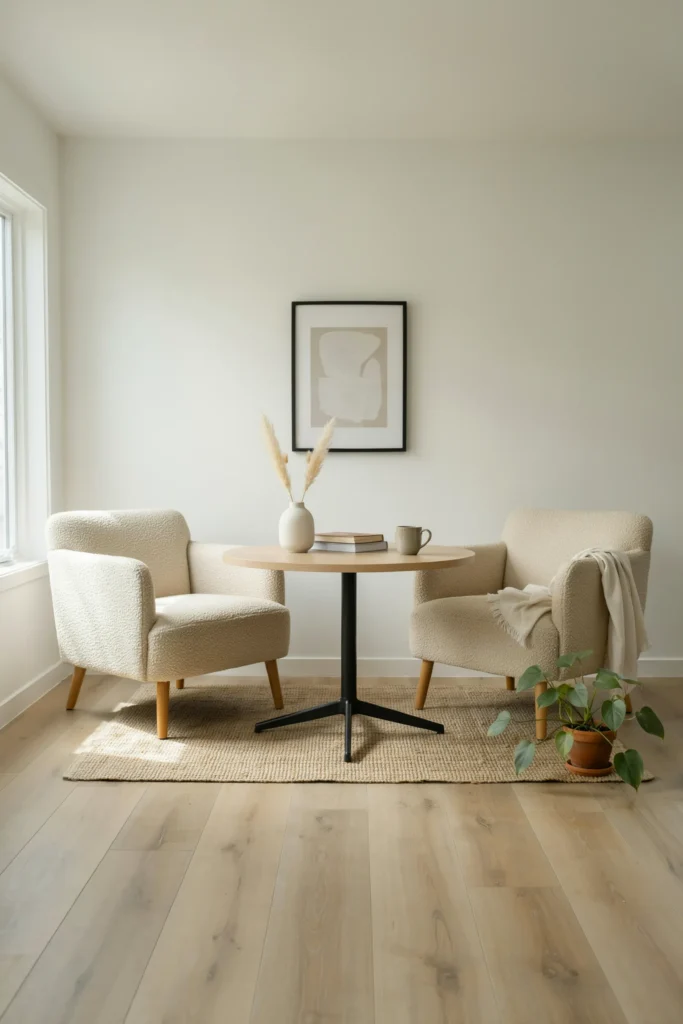
- Creates a balanced, intentional look that feels larger than random placement
- Symmetry reduces visual chaos, making a small room feel calmer
- Works well for conversation-focused seating arrangements
- Pairs easily with a round coffee table to soften sharp angles
Arranging furniture symmetrically, rather than scattering pieces around the room, creates a sense of order that makes a small space feel calmer and more intentional. Two matching chairs facing each other across a coffee table, for example, immediately reads as more organized than mismatched furniture placed at random angles throughout the room. I’ve tried rearranging a living room into a more symmetrical layout, and the change alone made the space feel noticeably larger, even though not a single piece of furniture was removed or replaced in the process.
This is one of the more subtle small space living room ideas since it costs nothing beyond simply rearranging what’s already there. I’ve noticed that symmetry works particularly well for conversation-focused rooms, since it naturally draws people to face each other rather than sitting at awkward angles. This approach pairs beautifully with the statement rug already covered, using both furniture placement and flooring to create one cohesive, balanced seating arrangement.
17. Vertical Plant Ladder
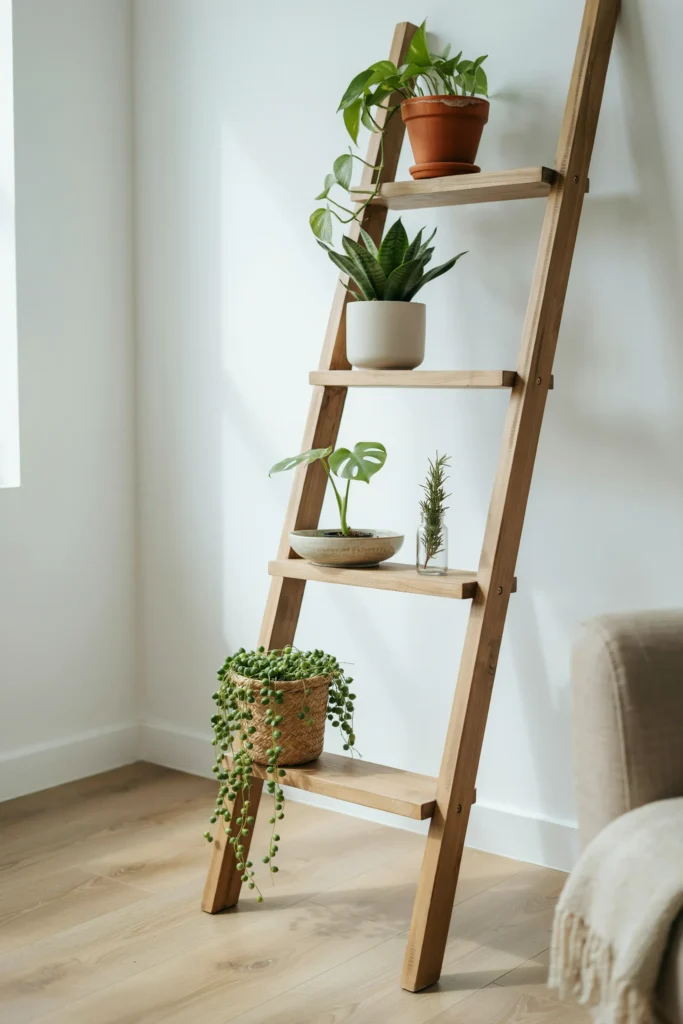
- Adds greenery without using any actual floor footprint
- Ladder shelves lean against the wall, requiring no drilling or mounting
- Draws the eye upward while adding natural texture to the room
- Easy to rearrange or move without permanent installation
A ladder shelf styled with potted plants brings greenery and texture into a small living room without requiring any drilling, mounting, or permanent installation. Simply leaning the ladder against a wall creates several tiers for plants, adding life to the room while barely touching the actual floor space available. I’ve tried this in a corner that previously sat completely empty, and the addition of greenery at multiple heights made the whole room feel more lived-in and vibrant without crowding the space in any meaningful way.
This is one of the most flexible small living room decor solutions since the entire ladder can be moved or repositioned whenever the layout changes. I’ve noticed that mixing plant sizes across the different ladder rungs creates a more natural, cascading look than uniform pots at every level. This idea pairs beautifully with the floating shelves already covered, adding another layer of vertical storage and styling that keeps the floor completely clear.
18. Full Cohesive Small Living Room
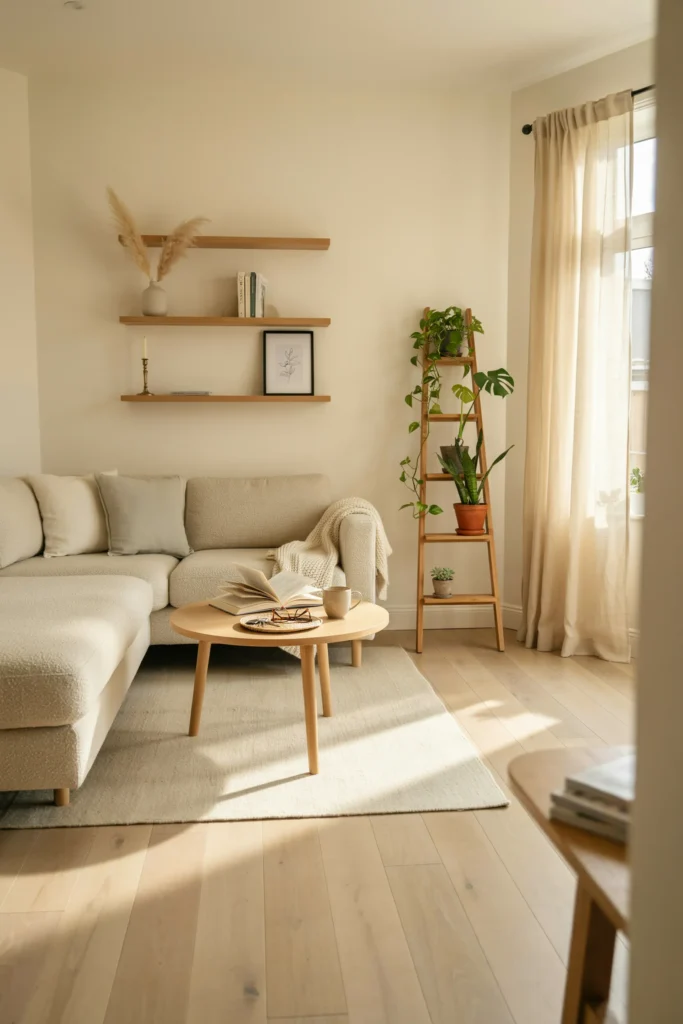
- Combines multiple ideas into one cohesive, fully styled room
- Layers light, texture, and function for maximum spatial impact
- Brings together furniture, storage, and greenery in balance
- Serves as a complete final look tying every element together
The most successful small space living room ideas aren’t built from just one clever trick, they’re layered from several techniques working together in harmony. Combining a slim sofa, floating shelves, a light neutral palette, and a plant ladder in the corner creates a fully cohesive room that feels intentional rather than sparse or disjointed. I’ve seen this layered approach work beautifully for anyone wanting their compact living room to feel genuinely spacious rather than simply empty, since thoughtful furniture choices matter more than the amount of open floor space alone.
What makes this final combined look so effective is how it draws together nearly every idea already covered throughout this list into one complete room. In my experience, choosing three or four complementary techniques, rather than trying every single trick at once, creates a far more polished and livable result. This approach transforms a genuinely small living room decor challenge into a bright, functional space that feels considerably larger than its actual square footage would suggest.
Conclusion:
A small living room doesn’t have to feel small once you know which tricks actually work. I’ve seen how something as simple as a well-placed mirror, a lighter color palette, or the right furniture choice can completely transform how spacious a room feels. That’s the real value of thoughtful small space living room ideas, they prove that square footage isn’t the only thing that matters. Save this post so you can revisit it while planning your own space, try one or two ideas this week, and share it with a friend who’s working with a small room too. Your brightest, most open living room yet is closer than you think