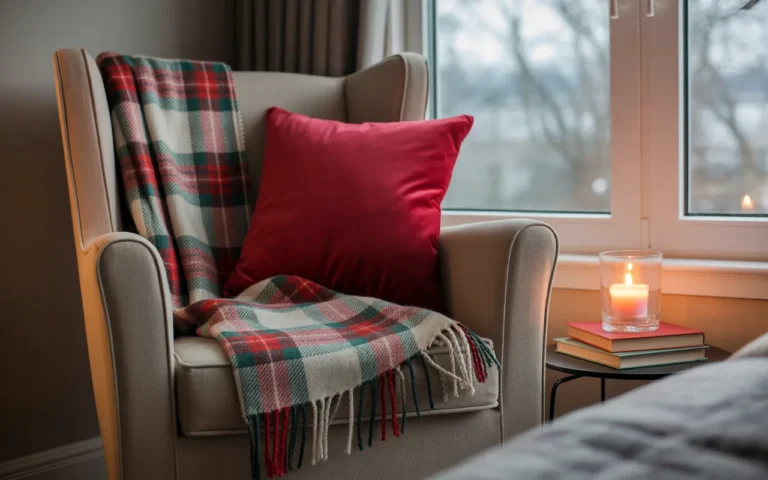
15 Cozy Studio Bedroom Divider Ideas to Zone Small Spaces
Living in a studio bedroom means every square foot has to work overtime, and finding privacy without sacrificing style can feel like a puzzle. That’s exactly why room dividers have become the secret weapon for small-space living. In my experience helping friends style their first studio apartments, the right divider doesn’t just split a room—it creates the illusion of separate zones, adds texture, and makes the whole space feel more intentional. Whether you’re craving a cozy sleeping nook tucked away from your living area or simply want a visual break between “home” and “bedroom,” these 15 studio bedroom divider ideas prove you don’t need extra square footage to feel like you have a real bedroom. From bookshelves to curtains to folding screens, there’s a solution here for every budget and style.
1. Curtain Room Divider
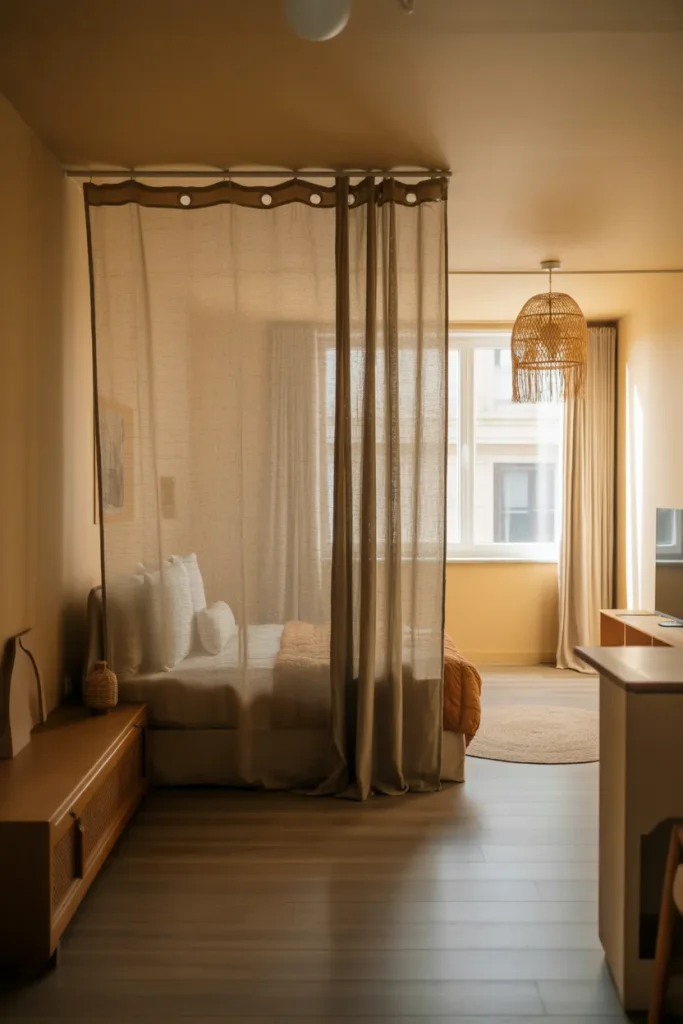
A curtain does more work in a studio bedroom than most renters expect. Hang a tension rod or ceiling track just past the foot of the bed, then choose a fabric heavy enough to block light but light enough to shift easily throughout the day.
In my experience, linen or cotton blends drape better than blackout fabric alone, since they soften the sound of an open room too. Pull the curtain closed at night and open during the day for a flexible, renter-friendly zone.
2. Open Shelving Divider
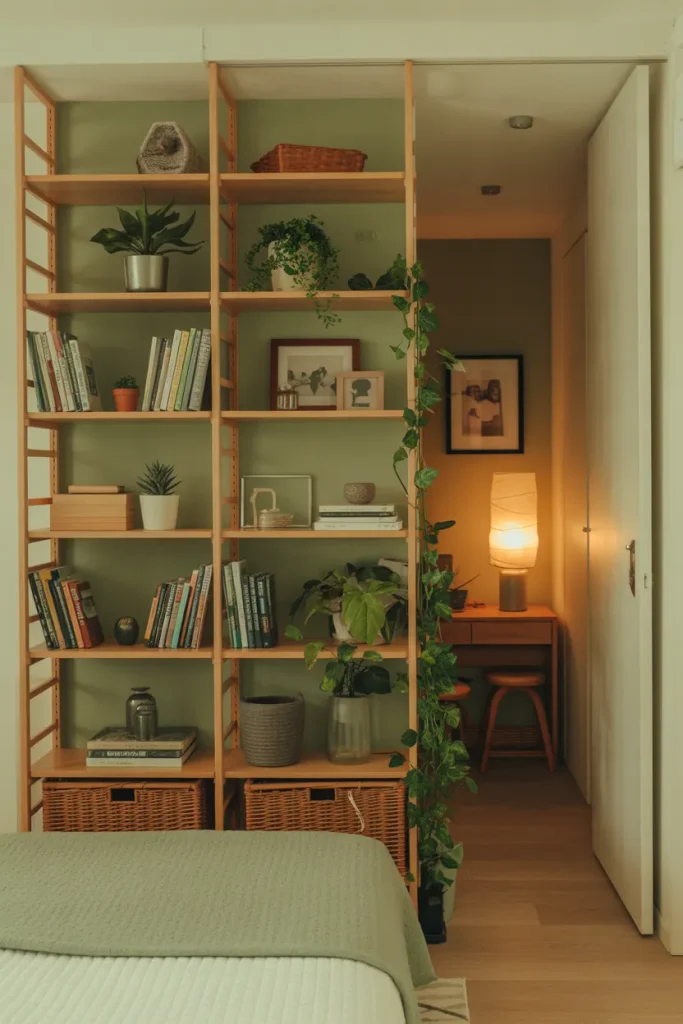
- Choose a shelving unit around chest height so light and air still pass through, keeping the room from feeling boxed in.
- Fill the lower shelves with heavier items like books and baskets, so the piece feels grounded instead of top-heavy.
- Leave a few shelves open and styled loosely, rather than packing every inch, so the divider reads as furniture, not a wall.
- Position it perpendicular to the bed rather than parallel, so it blocks sightlines without swallowing floor space.
- Add one or two plants on the top shelf to soften the hard edges of the wood.
Open shelving solves two problems at once, since it separates the sleep zone while giving you storage you’d need to buy separately anyway. It works especially well in a rented studio bedroom where drilling into walls isn’t an option.
3. Bookshelf Backed Divider
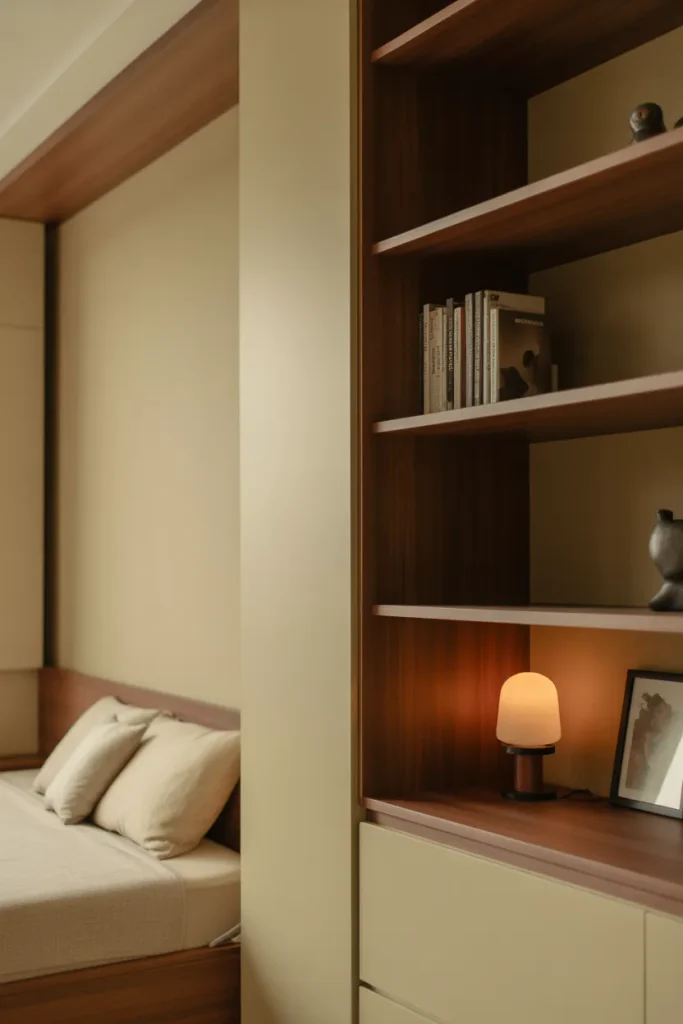
Quick Tip:
Face the finished, flat side of a bookshelf toward your sleeping area and the open, shelved side toward the living space. It gives the bedroom side a clean, wall-like look while keeping storage accessible from the other room.
A bookshelf works as a divider only if you think about both faces of it, not just one. Style the visible bedroom side with a small lamp or framed print, and let the living room side hold the books and everyday items. That’s why many experts recommend this over a single-sided unit for small apartments.
4. Folding Screen Zone
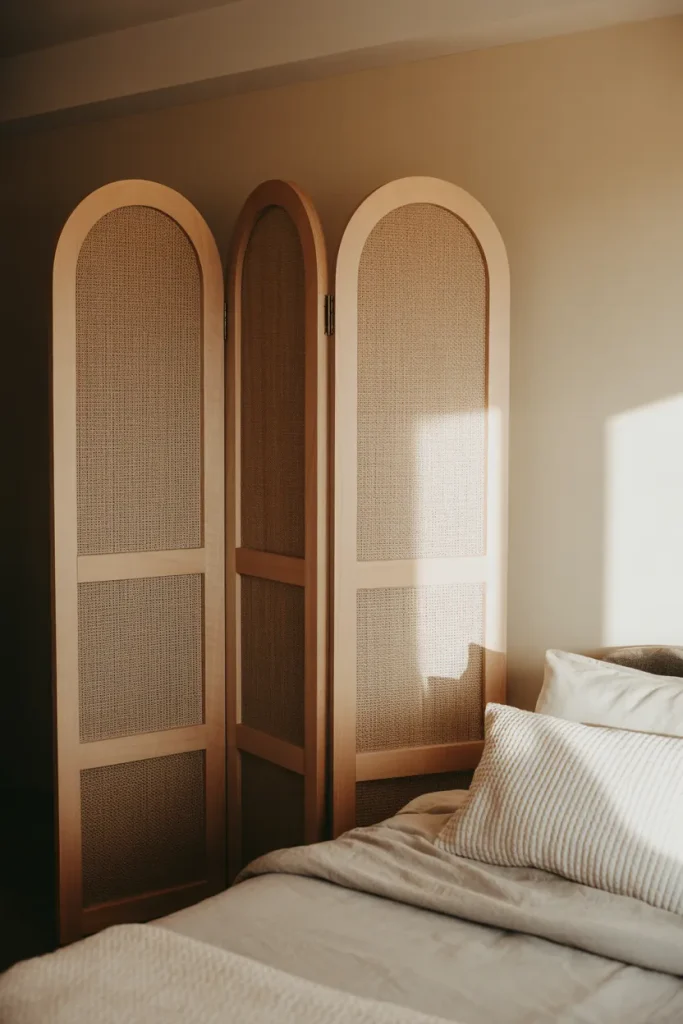
Before: A bed pushed against the wall with nothing around it makes the whole room read as one open box, even with nice furniture and good lighting.
After: A three-panel folding screen placed at an angle beside the bed instantly carves out a private corner, without a single tool or drilled hole.
Look for a screen at least 5 feet tall so it blocks sightlines from a seated or standing position in the main room. Fold it flat against a wall when you need the full floor space back, since that flexibility is the main advantage over a fixed divider.
5. Loft Bed Layout
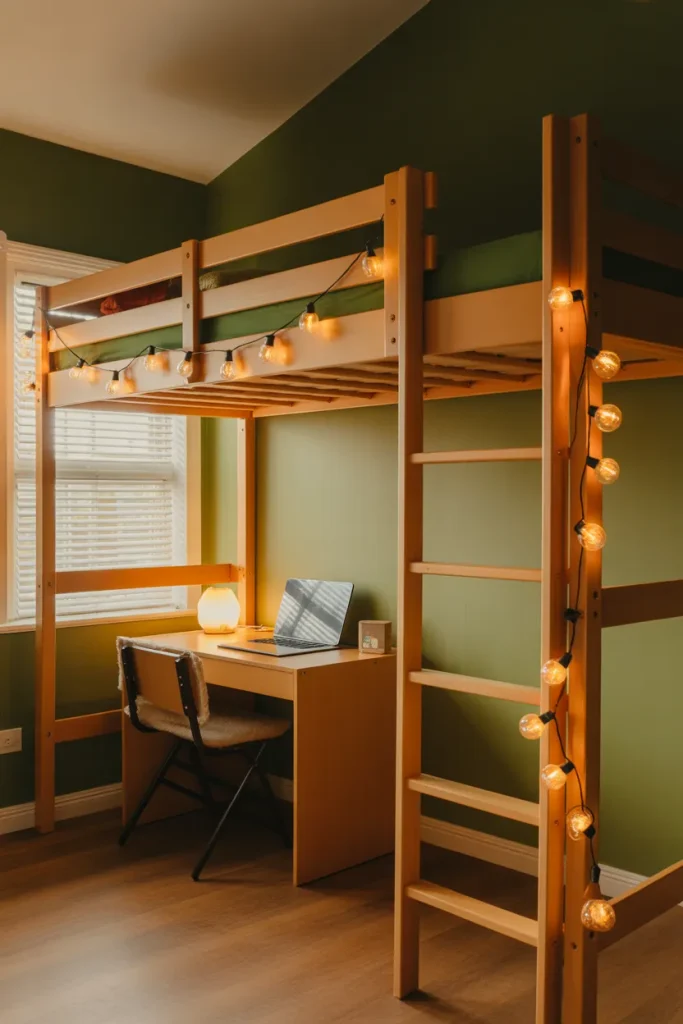
- Measure your ceiling height first. Most loft beds need at least 8 feet of clearance to leave comfortable headroom underneath.
- Position the loft bed along the wall farthest from the entry, so the space beneath it becomes a natural, tucked-away zone.
- Use the area underneath for a desk, a small reading nook, or additional closed storage.
- Add a curtain or slim shelf at the open side underneath to visually close off the space below.
Raising the bed off the floor is one of the few changes that adds an entirely new zone rather than just dividing an existing one. It suits a studio bedroom with high ceilings far better than low-ceiling apartments, so measure twice before committing.
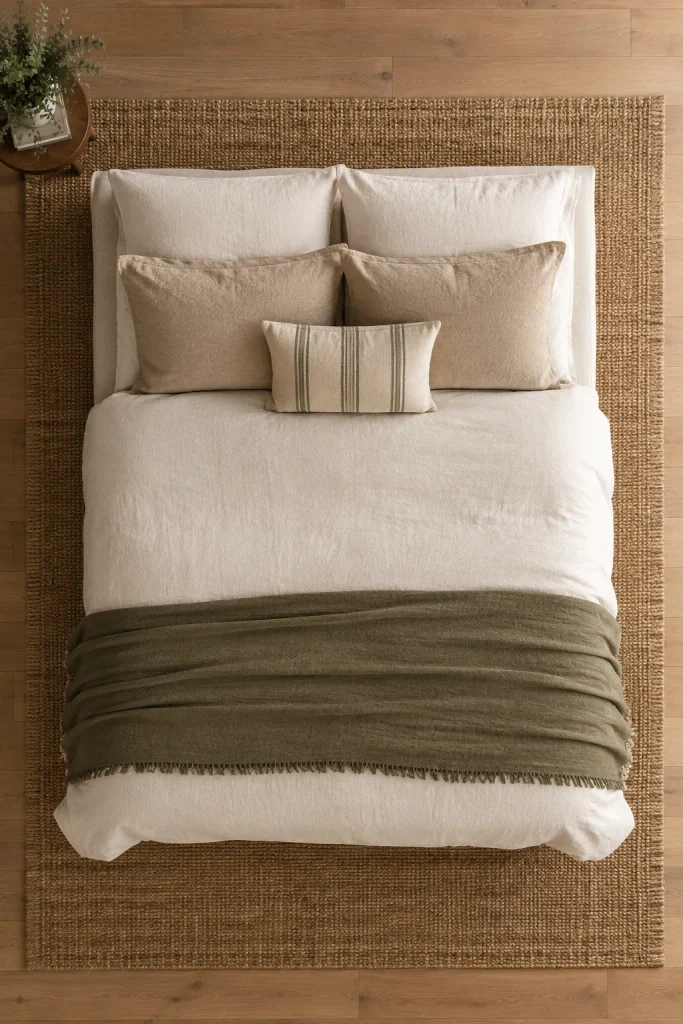
6. Rug Zone Marker
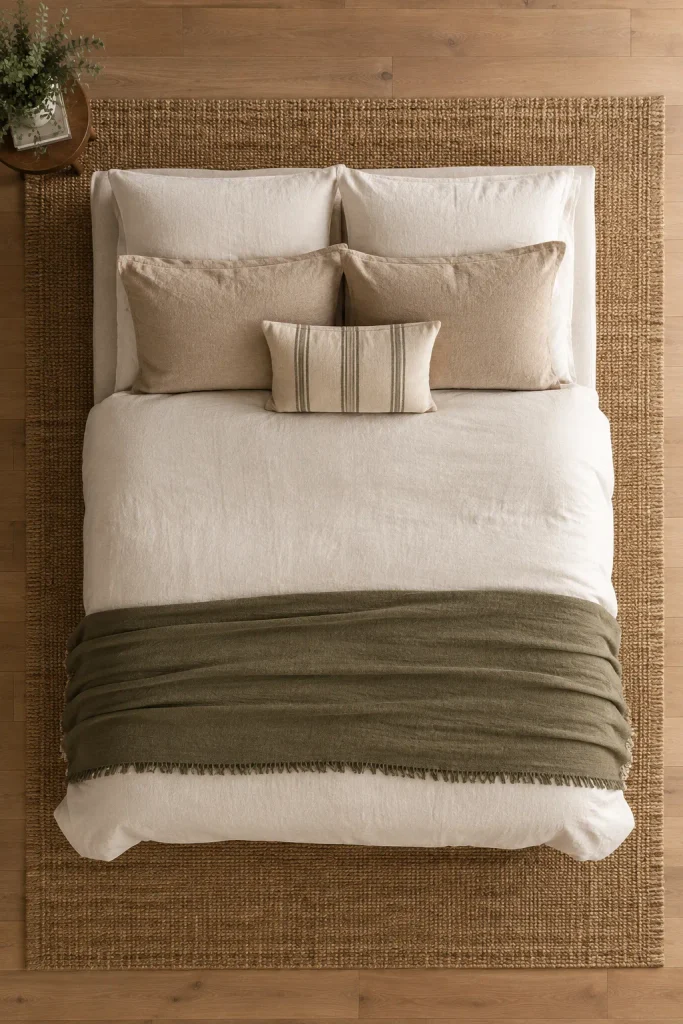
| No Rug | Rug Under Bed Area | |
| Visual boundary | None, floor reads as one space | Clear edge marks the sleep zone |
| Cost | $0 | Low to moderate |
| Commitment | None | Fully removable, no installation |
| Sound | Hard floor echoes | Rug softens noise in the zone |
A rug is the simplest divider on this list, and it’s often the one people forget. Place it under the bed and a few feet beyond the frame on each side, so the edge of the rug marks where the sleeping area begins without a single wall or curtain involved.
7. Bed Nook Alcove
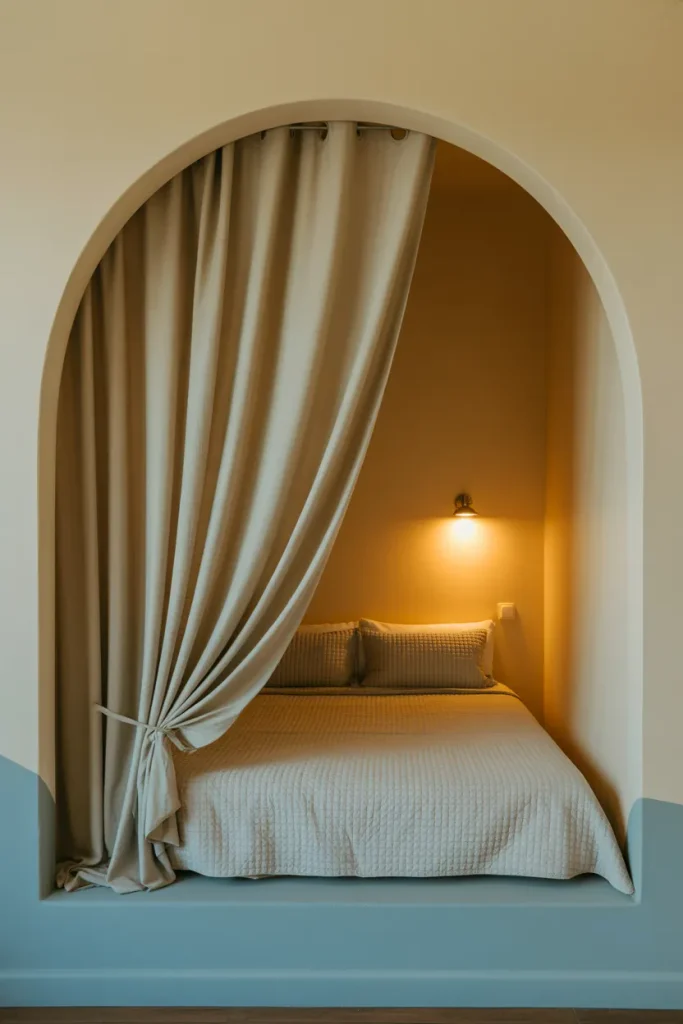
Do:
- Use an existing architectural nook or alcove for the bed if your studio has one, since it’s a divider built right into the room.
- Add a curtain across the opening for privacy and light control at night.
- Install a small shelf or sconce inside the nook to make it function like a real bedroom, not just a corner.
Don’t:
- Don’t block the nook’s natural light source if it has a window, since that light helps the space feel larger.
- Don’t cram furniture too tightly into the alcove, or it will feel like storage instead of a room.
- Don’t skip a headboard or wall treatment, since a bare wall inside a nook can look unfinished.
An alcove is the closest thing to a free bedroom wall a studio apartment can offer, so it’s worth building your whole layout around one if your unit has it. I’ve seen this simple setup make a studio feel like a true one-bedroom from the doorway.
Struggling with a tiny bathroom too? See how to fix that here → 15 Small Bathroom Ideas That Actually Save Space
8. Sliding Barn Door
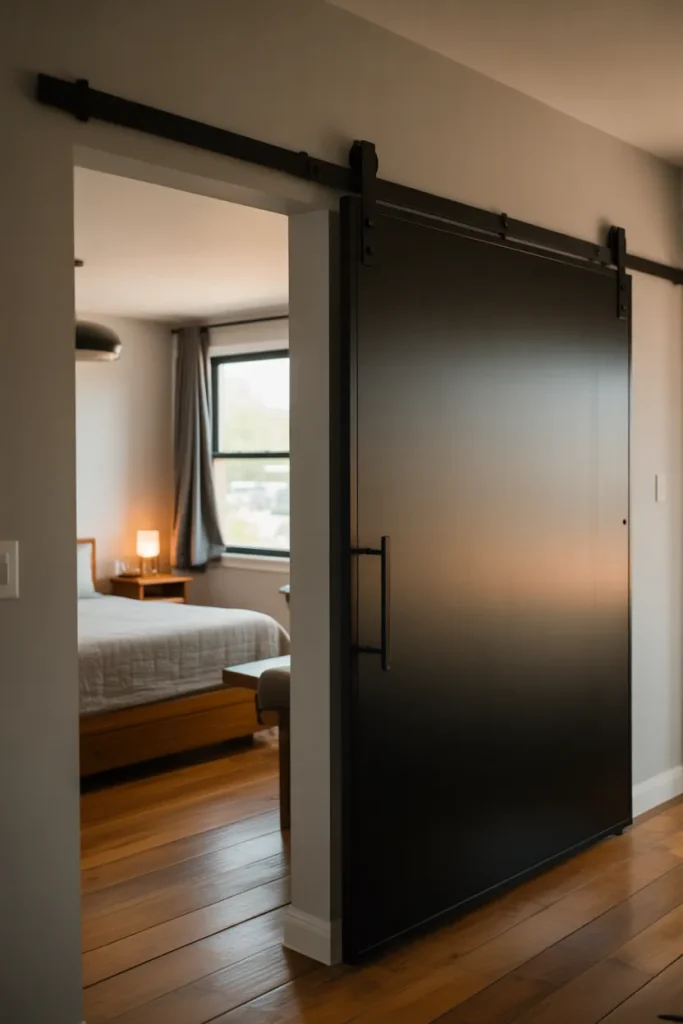
- Cost: Moderate to high
- Time: A weekend with two people
- Skill Level: Intermediate
- Best For: Studios with owner permission for hardware installation
A sliding barn door gives a studio bedroom the closest thing to a real door without the swing space a hinged door requires. Mount the track above the opening and let the door glide along the wall when open, keeping the floor completely clear. Check with your landlord first, since the track requires drilling into a stud.
9. Freestanding Wardrobe Divider
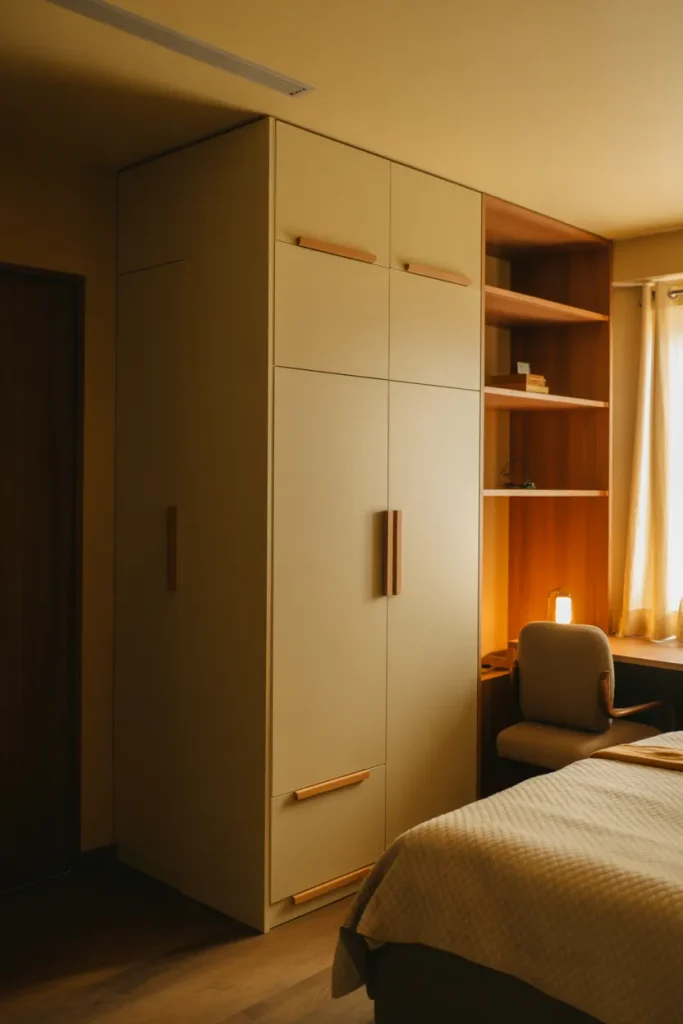
A wardrobe placed the right way solves your closet problem and your privacy problem in one move. Position a tall, freestanding wardrobe perpendicular to the wall instead of flush against it, so one side faces the bed and the other faces the living space.
This works especially well in older apartments without built-in closets, since you’re buying storage you already need and getting a divider as a bonus. Choose one with doors on the bedroom-facing side so it also doubles as a small dressing area.
10. Frosted Glass Partition
- Choose a lightweight frosted acrylic or glass panel rather than a heavy framed partition, so it’s easier to move if you relocate.
- Set the panel on a simple metal base or frame instead of mounting it into the floor or ceiling.
- Position it to block direct sightlines to the bed while still letting daylight pass through.
- Pair it with a small plant or floor lamp at its base to soften the industrial look.
A frosted partition keeps a studio bedroom feeling open and bright in a way solid dividers can’t match, since light still travels through the space. It suits a modern or minimalist studio far more than a rustic or cottage-style one.
11. Canopy Bed Frame
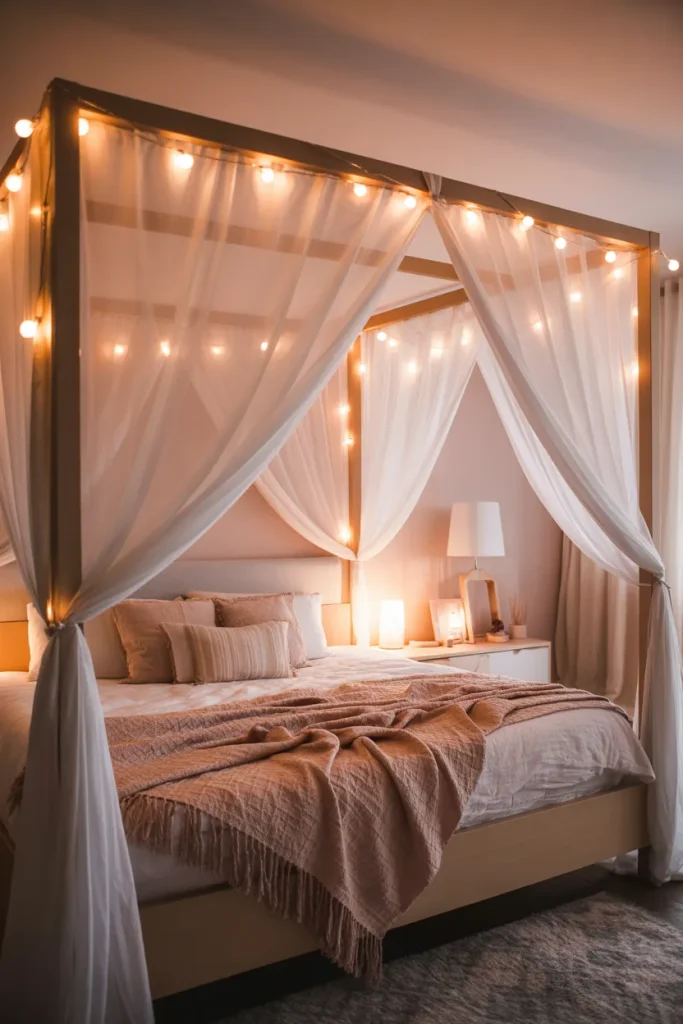
Quick Tip:
A canopy bed frame with sheer fabric panels creates a defined bedroom feel without touching a single wall. Drape lightweight fabric over just two sides rather than all four, so the space still feels open instead of enclosed.
The frame itself acts as a visual boundary the moment you walk into the room, even before any fabric goes up. Add string lights along the top rail for a soft glow at night, and choose a fabric color that matches your existing bedding so the whole corner feels intentional.
12. Bamboo Room Screen
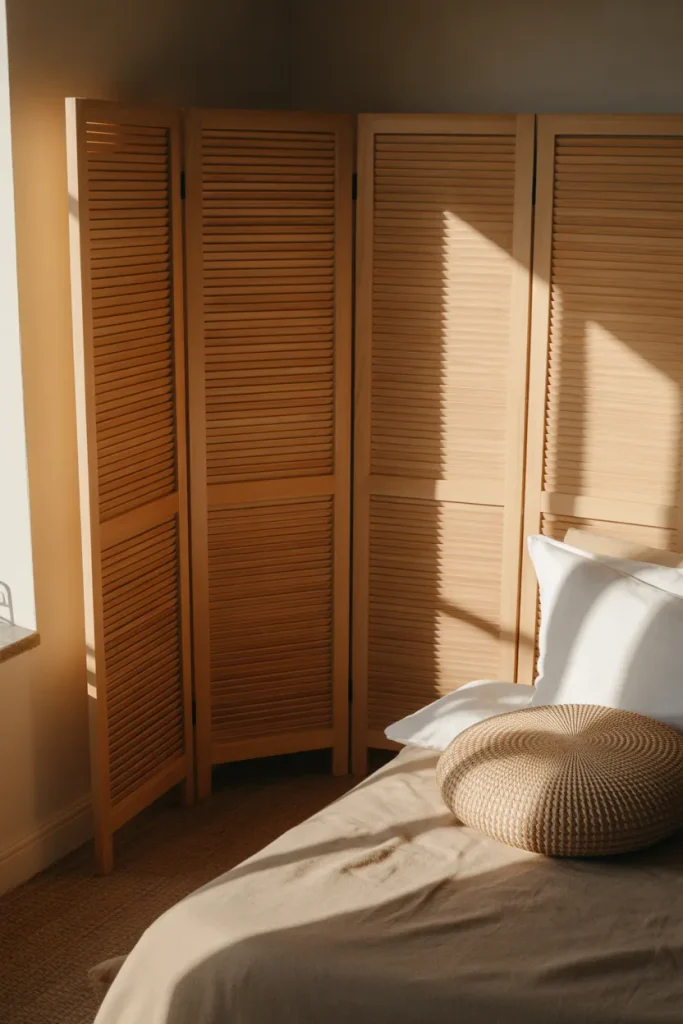
Before: A plain corner near a window often gets ignored in studio layouts, left as empty floor space with no real function.
After: A bamboo folding screen placed diagonally across that corner turns it into a defined, private sleeping nook with natural texture and warmth.
Bamboo and rattan screens fold flat for storage, which matters if you need the floor space back for guests or a workout session. Choose a screen with small gaps between the slats rather than a solid panel, so airflow and light still move through the zone.
13. Under-Bed Storage Boundary
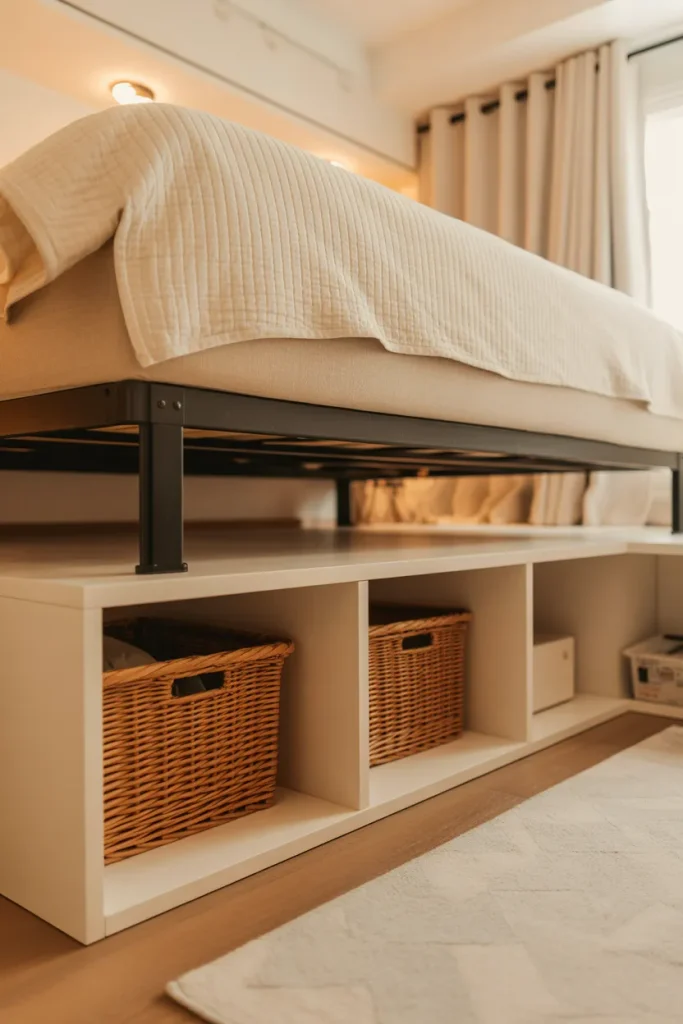
- Best For: Studios where floor space is tighter than wall space
- Cost: Low, especially with stackable bins
- Time: One afternoon to sort and organize
- Result: A visually raised, defined bed platform that reads as its own zone
Raising the bed slightly with a platform frame and filling the space underneath with storage bins does double duty. The added height alone makes the bed area read as a distinct platform rather than a mattress on the floor, and it solves the storage shortage most studio apartments struggle with from day one.
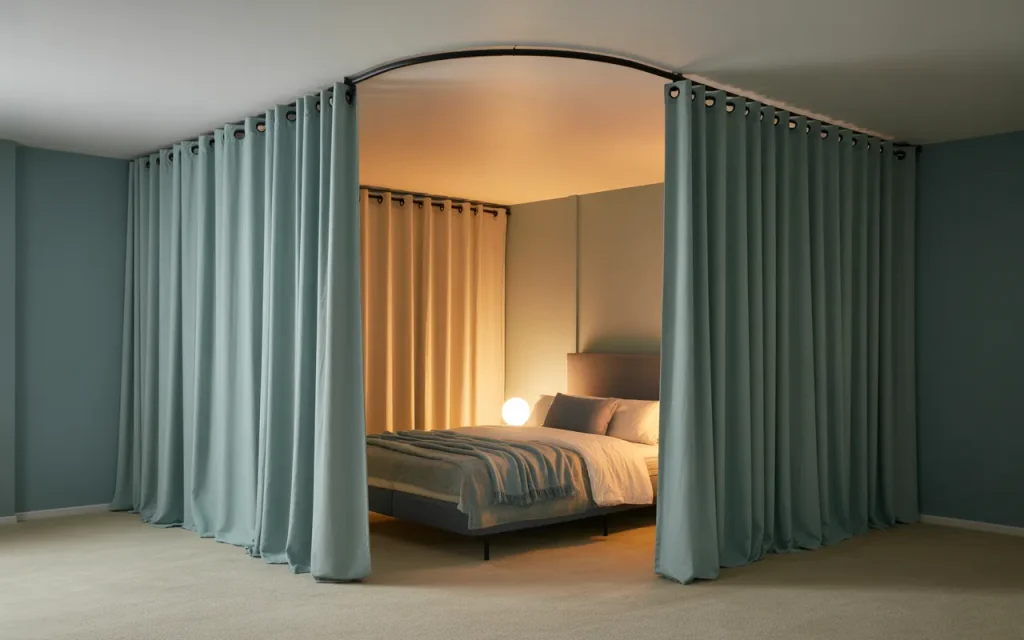
14. Ceiling Track Curtain System
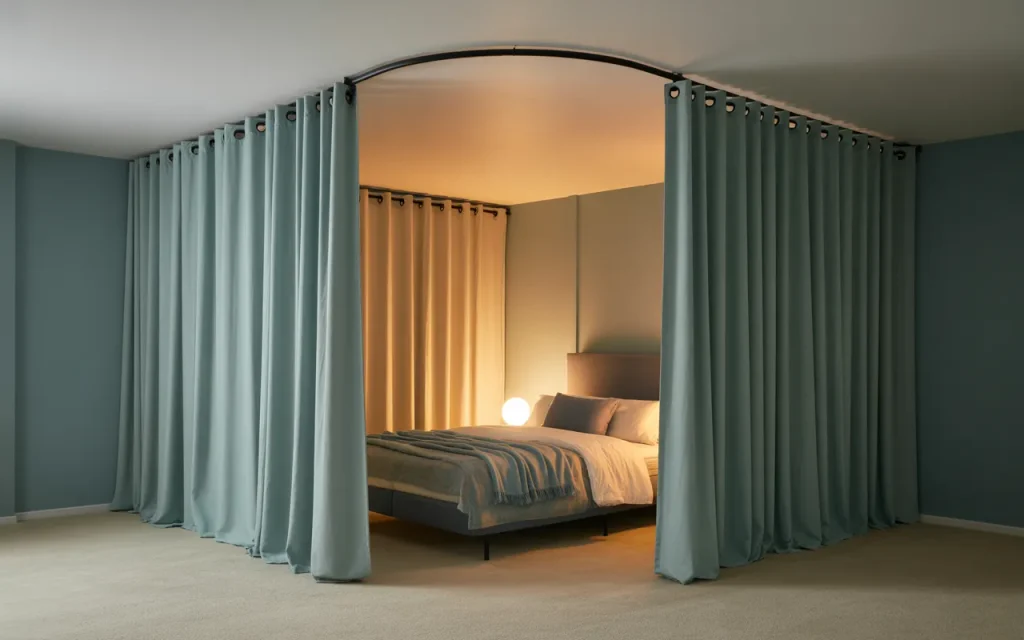
- Mount a ceiling-track curtain system in an L-shape or U-shape around the bed, rather than a single straight rod.
- Choose two curtain panels on separate tracks so you can open one side while keeping the other closed.
- Pick a fabric weight based on your priority: sheer for light and airflow, heavier for privacy and sound control.
- Test the track’s weight limit before hanging thick or lined curtains, since cheap tracks can sag over time.
A wraparound curtain system is the closest a renter can get to real walls, since it closes off three sides of the bed instead of just one. It takes more setup than a single curtain, but the payoff is a bedroom that feels fully separate once the panels are drawn.
15. Multi-Function Room Divider Furniture
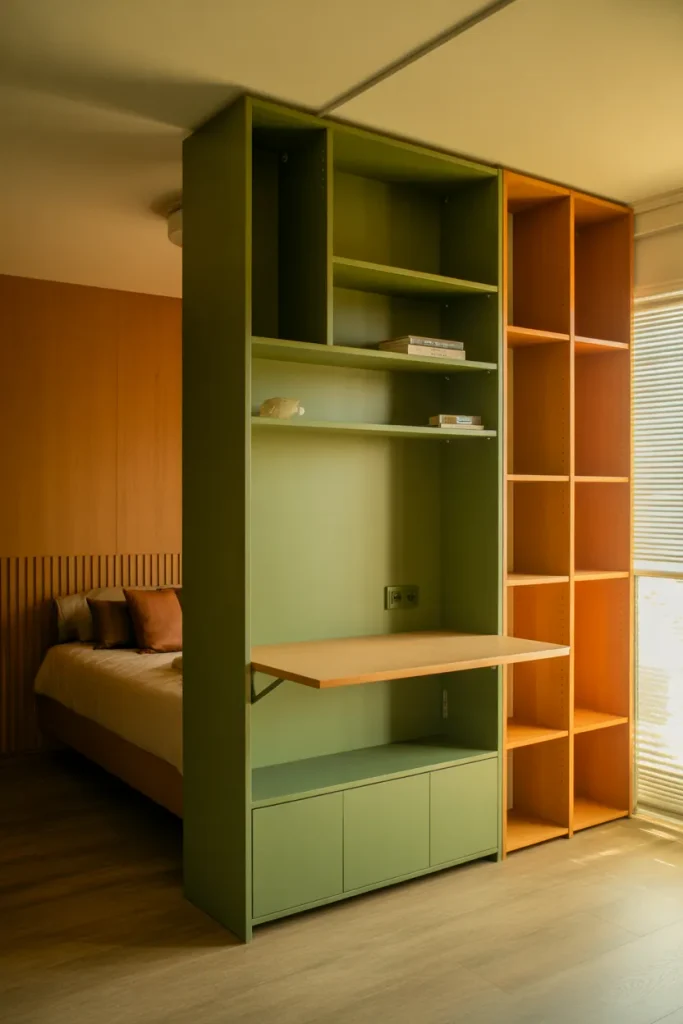
| Separate Pieces | Multi-Function Divider Furniture | |
| Floor space used | Divider plus separate storage or desk | One piece does both jobs |
| Cost | Two purchases | One purchase, often similar total cost |
| Flexibility | Fixed once placed | Some models fold or roll for easy moving |
| Function | Visual separation only | Separation plus storage, desk, or seating |
A divider that only divides is a missed opportunity in a small studio bedroom, where every piece of furniture needs to earn its space. Look for a room divider with built-in shelving, a fold-out desk, or hidden storage, so the same piece that separates your bed also solves another problem in the room.
CONCLUSION
Turning a studio bedroom into a space that feels calm, private, and truly yours doesn’t require a full renovation—just the right divider and a little creativity. I’ve seen how small changes like these can completely shift the way a space feels, turning an open floor plan into a home that has distinct, cozy corners. Whether you choose a tall bookshelf, a flowing curtain, or a sleek folding screen, each idea here is proof that small spaces can still feel spacious and intentional. Save this post to Pinterest so you can revisit these ideas anytime, try the one that fits your style, and share it with a friend who’s navigating studio living too.